

Monterey Bay Aquarium: The Complete Visitor Guide
Step into the Monterey Bay Aquarium and feel world on land slip away. Towering kelp forests sway just beyond the glass, revealing the bay’s most vibrant sealife. Sea otters play, sharks glide and rays drift through the blue—behold your front-row seat to the Pacific.
This guide delivers everything you need to visit the Aquarium without the guesswork, including the best time to visit the Monterey Bay Aquarium for calmer galleries, how to reserve timed-entry tickets that guarantee access, where to park, what to see first when you arrive, where to grab lunch nearby without leaving the walkable waterfront and how to extend your Highway 1 adventure south into the quieter, equally stunning stretches south of Big Sur where crowds thin and the coast reveals itself slowly.
You’ll find yourself completely absorbed, watching ocean life play out naturally. Whether you’re planning a few focused hours or a full day of discovery, you’ll find the practical details and insider timing that turn a regular museum visit into an experience you’ll carry with you long after you exit.
Tickets, Hours, Reservations
Here’s the inside scoop: Arrive at the gates with your timed-entry ticket in hand and skip the lines that snake around visitors without reservations. That’s the difference between walking straight into the action and spending your first hour hunting for entry.
Timed-entry tickets are your golden pass—reserve them in advance through the official website, especially if you’re visiting on weekends or during school breaks and holidays. Same-day walk-up sales exist but are limited and unpredictable, so don’t bank on securing entry on a busy day without booking ahead.
Colorful schools of fish, lush undersea ecosystems and exciting exhibits: There’s a lot to take in. Most first-timers should plan a minimum of three to four hours inside the exhibits, longer if you want to catch scheduled feedings at the Open Sea or Kelp Forest. Check the daily activity schedule when you book your tickets—feedings, educational talks and behind-the-scenes programs anchor your visit and let you see animals at their most active.
Membership covers general admission and unlocks early-access entry windows on select days, which can be a game-changer if you visit regularly or time a special event around your trip.
The Monterey Bay Aquarium opens daily with seasonal hours that shift throughout the year—check ahead so you’re not caught off guard by an earlier closing time in winter or extended summer hours. On peak days, the Aquarium reaches capacity and stops allowing new entries, so arrive early or book a late-afternoon slot when fewer people are pushing through the doors.
Pro Tips:
- Aim for the first hour after opening or late-afternoon entries when galleries feel calmer and you can actually linger without dodging crowds
- Arrive with a sense of which exhibits matter most to you, then spend 10 to 15 minutes there before moving on—popular tanks cycle through activity patterns, so timing helps you catch leopard sharks hunting or sardines schooling
- Re-entry rules allow you to leave and return the same day if you need a break outside or want to grab lunch away from the crowds
Getting There and Parking
Secure your parking spot early and the whole day opens up—no circling, no stress, just walking straight into the action. Highway 1 delivers you right to Monterey’s doorstep, and from there, signs point clearly toward Cannery Row and the Aquarium’s oceanside location.
Your arrival route depends on where you’re coming from: Bay Area travelers typically approach from the north via Highway 1, while Los Angeles visitors often come up the same route or cut across via US-101. Either way, allow extra time for coastal traffic on weekends and summer days—the final few miles into Monterey can slow considerably, but the payoff is worth it.
The Cannery Row Parking Garage at 601 Foam Street is your best bet for the Aquarium—it’s closest to the entry, relatively reliable for finding a spot even on busy days, and the flat-rate or hourly pricing (which varies seasonally and by demand) keeps things straightforward. If the main garage fills, surface lots on the hillside above Cannery Row serve as reliable overflow, typically available even on summer Saturdays and holiday weekends. For visitors heading to Old Fisherman’s Wharf first, the Waterfront Lot near 201 Washington Street uses ParkMobile for digital payment and offers posted rates and enforcement hours listed on the Wharf site. In summer months, the free MST Trolley connects downtown, the Wharf and Cannery Row—using public transit cuts parking stress entirely and lets you hop between highlights without moving your car.
Once parked, the Coastal Recreation Trail ribbons along the water and lets you explore on foot for the entire day. Directional signs appear throughout Cannery Row and the Aquarium grounds, making it nearly impossible to lose your way. Street parking exists but fills quickly in peak season, so the public garages represent your most reliable option for all-day access.
Pro Tips:
- Park once and commit to walking the area using the Coastal Recreation Trail, which connects the Aquarium, Cannery Row and nearby shoreline spots without requiring you to drive between them
- Keep a small daypack so your hands stay free while you navigate crowded exhibits—backpacks and shoulder bags get jostled in tight gallery spaces, so choose something compact
- Arrive before 10 a.m. on peak days to secure close-in parking; if arriving later, plan on spending 10–15 minutes hunting for a spot or using the MST Trolley instead

Best Time to Visit
Enjoy every moment. Weekday mornings deliver that sweet spot where you can stroll through the galleries and linger without jostling shoulders with tour groups. The Aquarium transforms depending on when you arrive—a peaceful morning feels like a completely different experience from a packed Saturday afternoon.
Weekday mornings and shoulder seasons (spring and fall) deliver the calmest experience overall. Summer and major holidays bring peak crowds—the Aquarium can fill to capacity on hot July weekends, and school breaks pack the galleries with families. Even rainy days work in your favor: fewer tourists venture out in coastal fog or drizzle, yet the experience inside remains complete and magical.
If midday is your only option, consider breaking up your visit with a lunch break outside the Aquarium—this gives galleries time to clear and you’ll return for a second pass when crowds have shifted.
Morning arrivals before 10 a.m. typically offer the smoothest flow through signature exhibits like the Kelp Forest and Open Sea. Late afternoon entries (after 3 p.m.) also work well if you’re flexible on timing, though evening hours can bring their own crowds as people finish work and head out for sunset experiences.
Ensure you see everything you came for. Use the daily activity schedule to anchor your visit around feedings or talks—these moments transform the experience from observation into education. Plan a minimum of three to four hours for a first-timer, longer if you want to linger at the Kelp Forest or Open Sea.
For maximum sightseeing, plan your Aquarium time with a shoreline walk afterward—the Coastal Recreation Trail connects directly to the building, offering a natural transition from indoor exhibits to scenic ocean viewing, where you’re likely to spot dolphins, sea birds or harbor seals thriving in their natural habitat.
Pro Tips:
- Build buffer time into your schedule if you’re visiting during peak seasons—lines form at ticket gates and popular exhibits may have temporary queues
- Use the daily schedule to anchor your visit around feedings or talks; plan your route to be near the Open Sea or Kelp Forest when activity peaks
- On rainy days, skip the crowded afternoon entries and book an early morning or late slot instead
Must-See Exhibits
Stand before the Kelp Forest and you’ll understand why people return to this Aquarium year after year—it’s not just a tank, it’s a window into an astounding underwater world. The Monterey Bay Aquarium lineup shifts seasonally, but four exhibits remain constant anchors worth your time, each offering something you won’t find anywhere else on the Central Coast.
Kelp Forest: This three-story living habitat is the Aquarium’s signature. Living kelp stretches toward the surface, leopard sharks glide through the shadows and bright orange garibaldi flash between the fronds. This unique diver’s-eye perspective allows you to watch predator and prey navigate a landscape that mirrors the real forest just offshore.
Open Sea: A million-gallon tank holds schooling sardines, tunas, sea turtles and other open sea animals in constant motion. Feeding times are worth coordinating your visit around—the activity level shifts dramatically when keepers introduce food and the whole tank comes alive. It feels less like looking at fish and more like witnessing an underwater show where every creature has a role to play.
Into the Deep: This exhibit rotates featured species, but always delivers creatures you’ll see nowhere else—midwater jellies that drift like living art, strange-looking isopods and other abyssal animals adapted to crushing darkness and cold. It’s quiet, mesmerizing and a perfect counterpoint to the bright energy of the shallower exhibits. The otherworldly glow and alien creatures make this gallery worth lingering in.
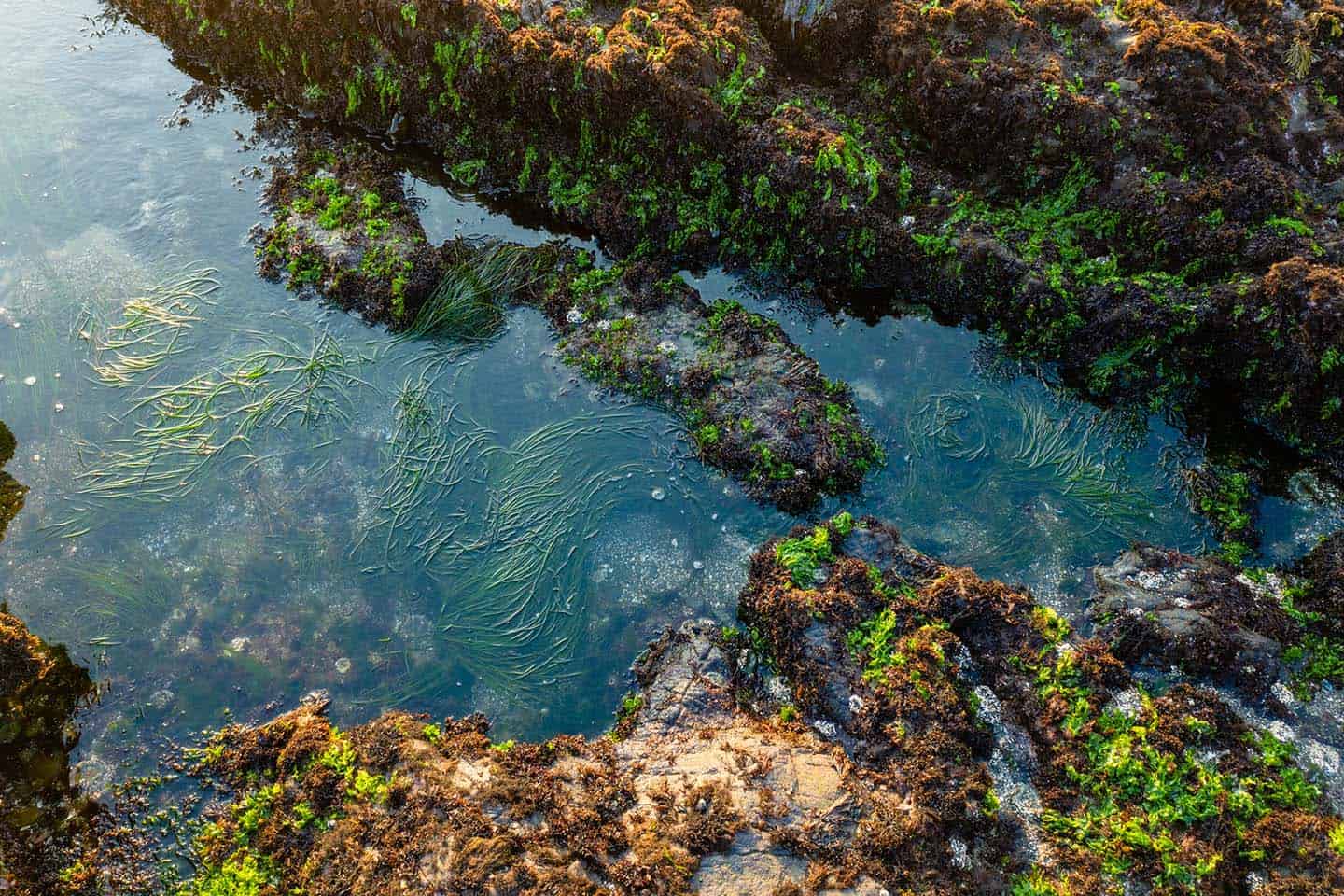
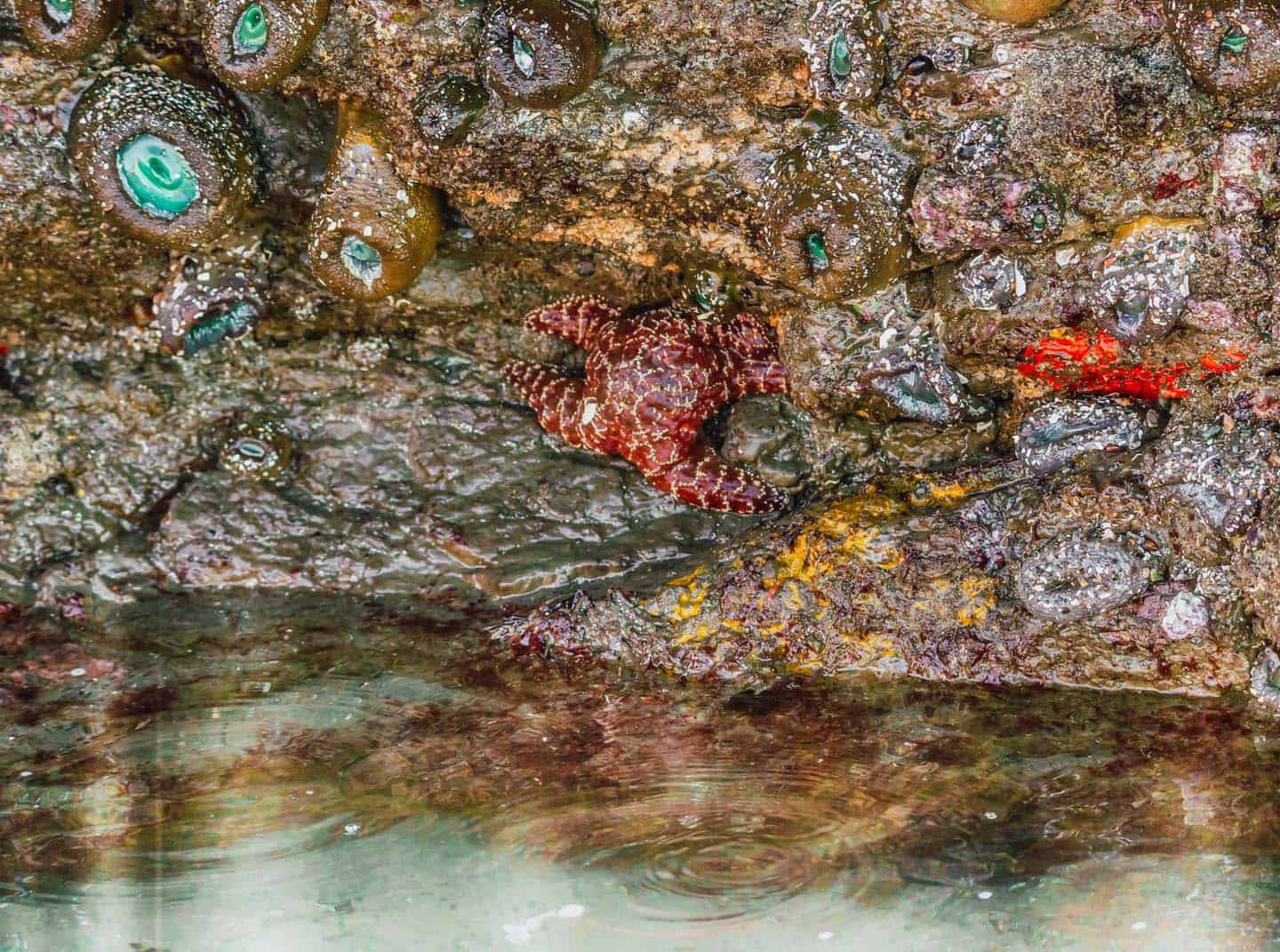
Sea Otters and Touch Pools / Splash Zone: These are the galleries where kids and adults alike press their noses to glass, where you can actually touch starfish and sea urchins in shallow pools, and where the Aquarium shifts from observation into interaction. The Splash Zone delivers hands-on tidepooling experiences that connect all ages to what lives in Monterey’s underwater coves nestled just outside the building.
Pro Tips:
- Prioritize one or two must-sees when you first arrive, before the peak morning rush fills the galleries—stake out the Kelp Forest early if that’s your non-negotiable
- Check the activity boards near each major exhibit for feeding and talk schedules; plan your route to align with moments when animals are most active
- Spend 10–15 minutes at your top priorities to catch behavioral moments, then move through secondary exhibits at a comfortable pace
With Kids and Accessibility
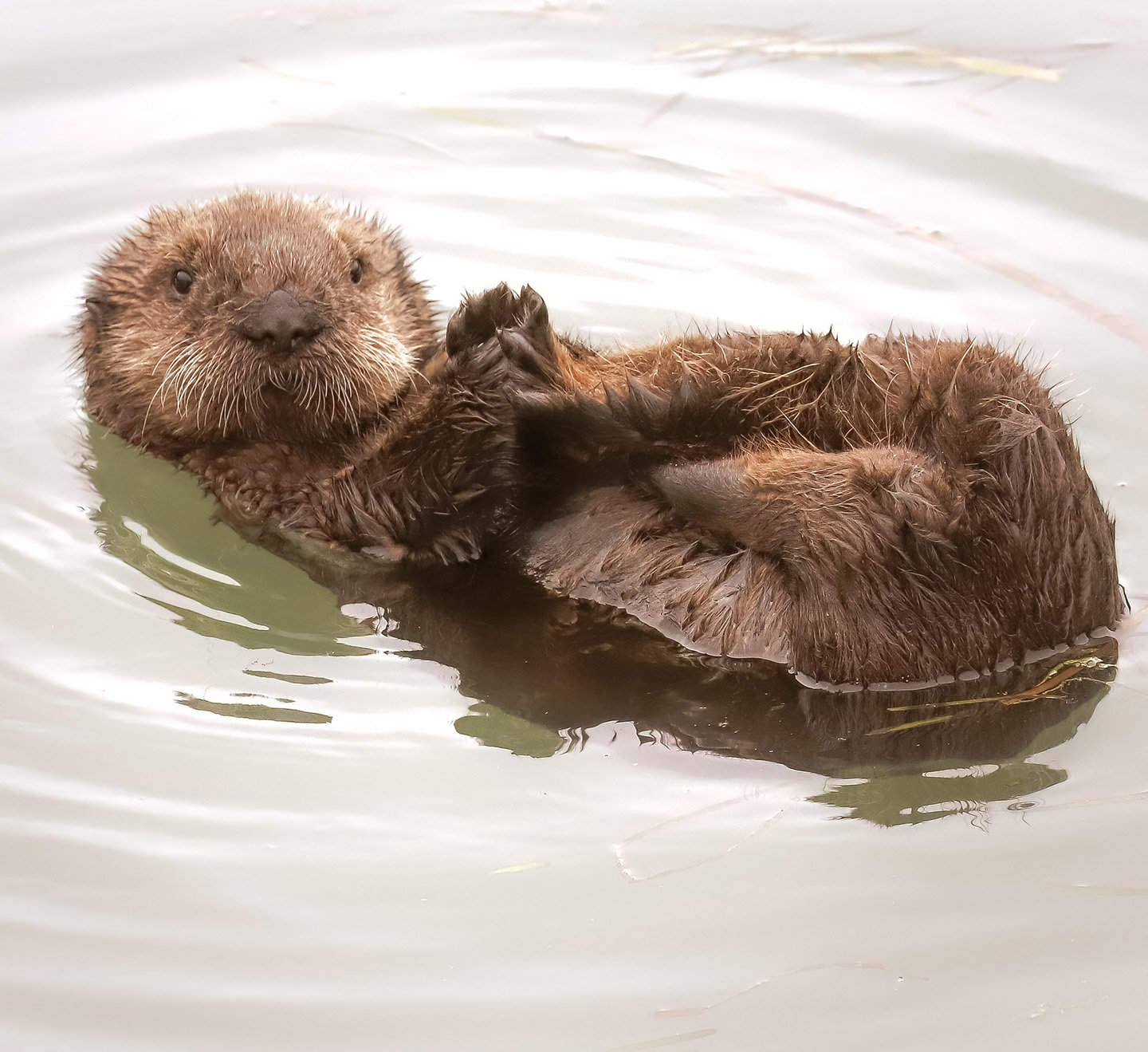
Watch your toddler’s face light up as they spot a sea otter, or see a teenager exclaim in awe—the Aquarium welcomes families that move at their own pace.
Strollers navigate the Aquarium without fuss—elevators connect all floors and pathways are wide enough for easy movement. Free wheelchair loans are available at the entry (bring an ID for the checkout process), and accessible routes guide you through major exhibits. Family restrooms and nursing areas sit on the map provided at entry; ask a staff member to point you toward the quietest one if you need a calm moment to regroup.
The Splash Zone and Touch Pools captivate younger visitors who aren’t ready for passive observation—hands-on exploration keeps energy engaged and creates tactile memories of starfish spines and sea anemone texture.
For families with sensory sensitivities, the Aquarium’s quieter upper galleries and early-morning timing work better than peak-hour visits when echoes and crowd energy amplify. Elevators reduce stair climbing, accessible viewing windows are positioned for wheelchair-height sight lines, and staff can point you toward exhibits with lower sensory intensity if needed.
A good rule of thumb? Split your visit into short gallery bursts (20 to 30 minutes) punctuated by snack breaks or shoreline walks—this pacing keeps kids engaged and prevents the restless-wandering phase that hits mid-visit.
If little ones need to get their wiggles out, use the Coastal Recreation Trail right outside for natural breaks that reset energy and mood. Be sure to establish a designated meeting spot (like the entrance or a specific bench) in case your group separates in crowded galleries, especially during peak hours.
Pro Tips:
- Split into short gallery bursts with snack or shoreline breaks to keep kids engaged
- Keep a meet-up spot in case your group separates
- Ask staff for sensory-friendly timing recommendations on arrival
- Rent a wheelchair even if mobility isn’t an issue—it keeps kids entertained and reduces fatigue on long days
Where to Eat Nearby
Step outside the Aquarium and you’re already surrounded by options—the smell of fresh seafood drifts from Cannery Row, benches overlook the water and you don’t have to move your car to eat well.
The Aquarium policy prohibits outside food in exhibit areas, but hunger is quelled easily on Cannery Row and at Old Fisherman’s Wharf—both sit within a five to ten-minute walk and offer everything from quick bites to sit-down dining with bay views. This geography is actually perfect: you can eat outside the Aquarium to reset between gallery sessions, avoid the monotony of indoor cafes and return refreshed for a second pass through your favorites.
Quick bites include coffee shops and casual eateries scattered along Cannery Row—grab a sandwich or pastry to eat on a waterfront bench. For sit-down meals, Cannery Row standbys and bay-view restaurants fill the middle ground between fast food and formal dinner.
The Wharf specializes in seafood and clam chowder served in irresistible sourdough bowls—iconic when paired with the views over the water. Patio seating is abundant, and kid-friendly options dot both areas, making it easy to find something that suits your group.
Wave Street Café serves easy breakfast and brunch just steps from the trail, while schooners Monterey delivers ocean-view lunches worth planning the day around. For dinner, the Whaling Station Steakhouse perches above Cannery Row with classic fare and sunset harbor views.
That said, timing changes everything. Arrive at 5 p.m. instead of 7 p.m. and you’ll find a table without the wait, plus sunset views depending on the season. Skip the noon rush and eat at 2 or 3 p.m. when restaurants relax. On peak days, book lunch early (11:30 a.m.) or plan an off-peak meal time (2 to 3 p.m.) to avoid the noon-to-1 p.m. rush when the waterfront fills up.
Pro Tips:
- Eat outside the Aquarium to reset between gallery sessions rather than using indoor cafes, which feel claustrophobic after time in crowded exhibits
- On peak days, book lunch early or plan an off-peak meal time to avoid the noon rush
- Walk the Coastal Recreation Trail between eating and exhibits to maximize movement and fresh air
Pair It With a Walk
Take a breath outside and feel the crisp Pacific air fill your lungs. The paved Coastal Recreation Trail runs right past the Aquarium, connecting you to miles of waterfront adventure—without the need to move your car.
The trail curves along the water for roughly three miles between the Aquarium, Cannery Row, Old Fisherman’s Wharf and Pacific Grove, offering flat, paved walking with ocean views the entire way. This is where you’ll likely spot sea lions lounging on pilings, harbor seals hunting in kelp beds and, if you’re lucky, dolphins or otters just offshore.
Walk north along the trail toward Pacific Grove where stately Victorian homes face the bay and the energy shifts to a quieter pace. Lovers Point Park offers grassy lawns sloping to protected coves—settle on a bench and watch the water for hours or enjoy a picnic.
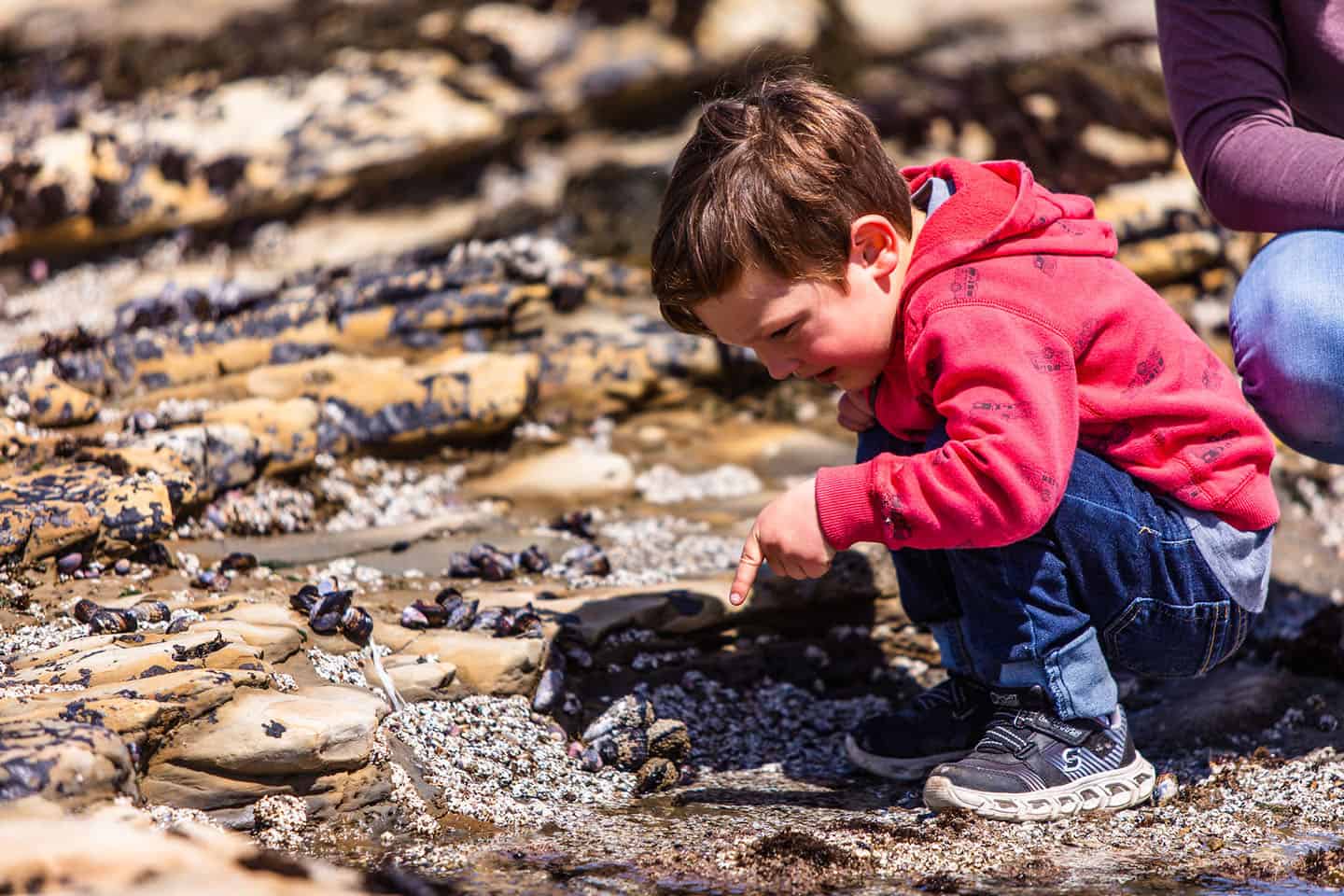
Pull over along Ocean View Boulevard’s multiple turnouts to snap photos or simply sit and listen to peaceful waves. Perkins Park delivers another scenic stretch with shimmering tide pools emerging at low tide and plenty of space without competing for real estate with tour groups.
Want to catch a classic coastal sunset? Sunset timing shifts dramatically depending on weather—clear days paint those classic California twilights with the sun sinking into the Pacific, while foggy evenings soften into silvery grays that feel equally beautiful. Both reward the effort, so don’t skip the sunset walk just because fog rolled in.
Do bring a light layer for wind and sun protection—coastal conditions shift quickly, and benches and overlooks appear frequently so you’re never far from a place to rest. Keep cameras ready for dolphins, sea birds and harbor activity. Use binoculars or zoom lenses to get close-up views without disturbing wildlife. The best part: The trail’s flat, paved surface makes it ideal for families with strollers, casual cyclists and anyone who craves coastal beauty without steep climbs.
Pro Tips:
- Build 60 to 90 minutes into your day specifically for shoreline walking—it balances the indoor gallery time and lets you experience the actual marine environment
- Bring a light layer for wind and sun; benches and overlooks are frequent
- Keep cameras ready for dolphins, sea birds and harbor activity
- Visit at sunrise or sunset for the softest light and smallest crowds
Sample Plans
Map your day strategically and you’ll hit all the highlights without feeling rushed or overwhelmed—whether you have a few hours or the whole day to explore. Here’s how to structure your visit so you leave feeling like you fully experienced the coast’s many wonders versus just checking boxes.
Half-Day Visit (4 to 5 hours):
Be smart with your time. Arrive at your timed-entry window and head straight to one of the major exhibits—the Kelp Forest or Open Sea—while crowds are light. Spend 30 to 45 minutes there, then move through two other must-sees at a comfortable pace.
Grab lunch on Cannery Row or the Wharf (allow an hour), then take a 30-minute shoreline walk along the Coastal Recreation Trail. Return to the Aquarium for a final 30 minutes in a quieter gallery before heading south or back to your hotel. This pacing captures the highlights without exhaustion.
Full-Day Visit (8 to 10 hours):
Begin the adventure early with a timed entry at opening, spending the first 90 minutes on two major exhibits while the Aquarium feels spacious. Enjoy a mid-morning break with coffee and a walk along the Coastal Recreation Trail (90 minutes total, including the walk).
Now, return for a scheduled Aquarium talk or feeding program (30 to 45 minutes). Savor a sit-down lunch with bay views (90 minutes), then spend the early afternoon exploring smaller galleries and the Touch Pools.
Late afternoon, make time for a sunset walk along the trail, watching golden light paint the coast. Cap the day with dinner nearby on Cannery Row or the Wharf, reflecting on the day’s many-faceted discoveries.
Pro Tips:
- Build 15 to 20-minute slack time into your plans for lines at entry gates and unexpected crowds at popular exhibits
- Save a quieter gallery (like the sea-horse or jellyfish spaces) for the last 30 minutes as a way to decompress before heading out
- Plan your meal breaks strategically to avoid moving the car and to reset between gallery sessions
What to Pack and Expect
Packing here is all about options. You’ll move through crowded galleries, walk along windswept shorelines and possibly wade through tide pools—it’s important to stay comfortable for the entire day.
Layers make or break a Monterey road trip—the coast shifts between sun and fog, and wind picks up along the shoreline. Bring a lightweight jacket or windbreaker, a hat for sun protection (coastal sun reflects off water even on foggy days), sunscreen and a refillable water bottle.
Comfortable shoes with good grip matter if you’re exploring slippery tide pools or uneven coastal paths, while a compact daypack keeps your hands free. Lastly, a fully charged phone or camera captures those incredible moments worth sharing.
If you love taking nature photos, you’ve come to the right place. The Monterey Bay Aquarium welcomes photography, but avoid using bright phone lights near sensitive exhibits—the flash disorients animals and bothers nearby visitors.
Keep headphone volume low in crowded galleries so conversations and ambient sounds remain pleasant for everyone. It goes without saying that tapping the glass is a no-no; it stresses animals and signals to staff that you might need a reminder about exhibit rules. Shoulder straps should stay snug in busy areas to avoid unintended jostling.
Know before you go: Check the Aquarium’s visitor guidelines for items not allowed inside (typically large bags, outside food and certain sharp objects for safety). The map provided at entry shows water fill stations and elevator locations, so you’re not wandering blindly if you need to refill your bottle or find a quiet bathroom.
Pro Tips:
- Avoid peak hours (11 a.m. to 2 p.m.) if sensory overstimulation is a concern—the energy in galleries can feel intense during lunch hours
- Use the map to locate family restrooms and quieter galleries ahead of time if you’re visiting with young children or anyone who might need a calm space
- Wear grippy footwear for any shoreline exploration; fashion footwear turns treacherous on wet rocks

Stewardship Travel for Good
Every creature you see in the Aquarium thrives just beyond the walls in the actual Monterey Bay National Marine Sanctuary—and your small choices ripple through that entire ecosystem.
Remember, you’re visiting within one of California’s most protected marine areas, so respect that fragile environment by staying on signed paths and boardwalks during shoreline walks, packing out all trash and choosing tours operated by outfitters that follow responsible wildlife viewing practices.
Keep distance from animals along the coast—use zoom lenses or binoculars rather than approaching, and if an animal’s behavior changes (moving away, diving, vocalizing differently), increase your distance immediately.
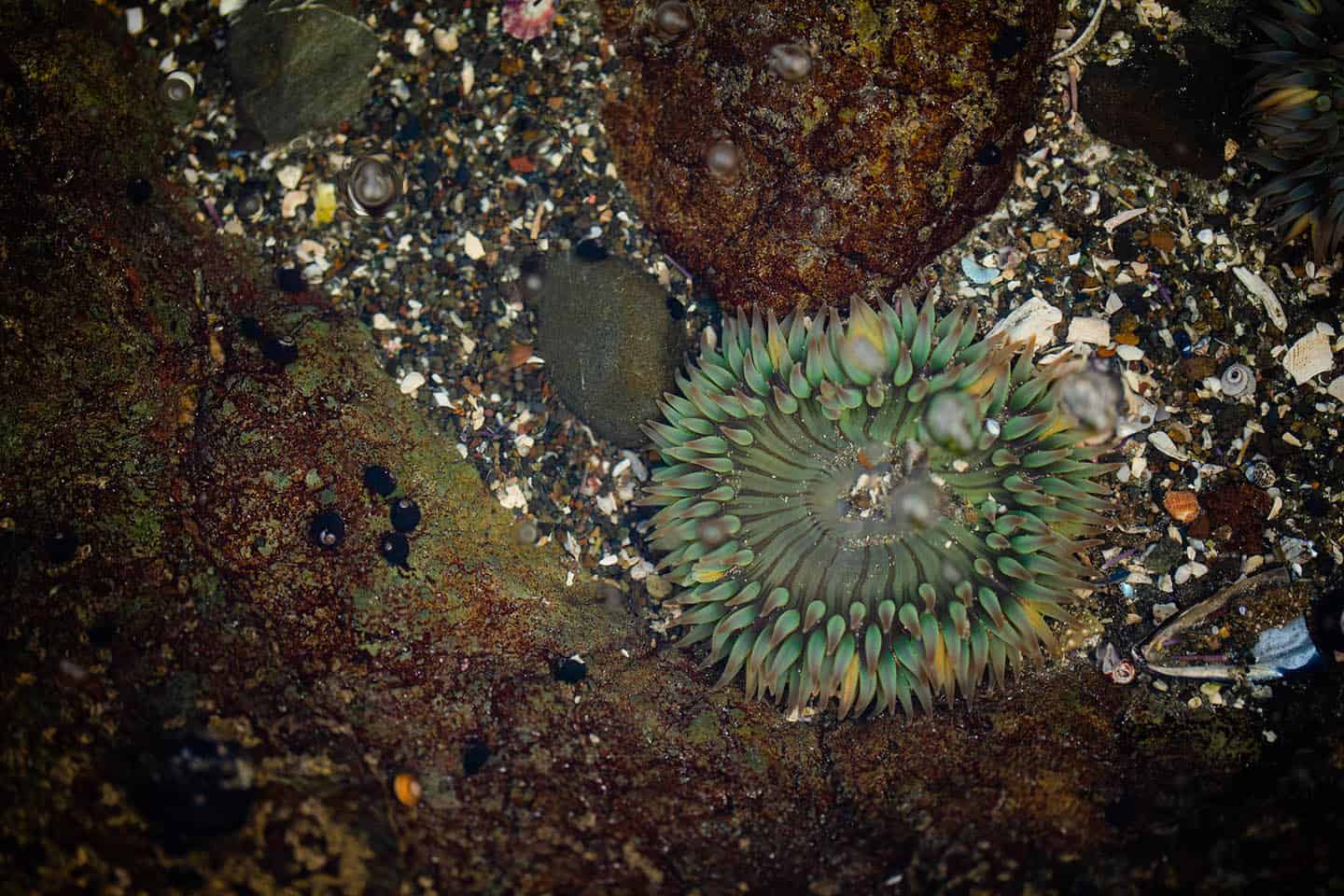
Teach kids to spot wildlife with eyes first, then binoculars—this builds patience and respect for the animals’ space. Please avoid walking on fragile tide pools, which host delicate animals that don’t survive human contact.
When you pack a picnic to enjoy along the trail, take all trash with you—plastic bags, bottle caps and food waste end up in the stomachs of marine animals that mistake them for meals. As for drones, skip them entirely; the noise disrupts natural behaviors and upsets already-vulnerable creatures.
If you happen to see an injured or distressed marine animal during your visit, report it to the Aquarium or local wildlife authorities rather than attempting rescue. You can also consider supporting organizations like the Monterey Bay Aquarium that fund research, education and conservation protecting this coastline. Together, we all make a difference. Your choices help keep these precious ecosystems for generations to come.
Pro Tips:
- Teach kids to spot with eyes first, then binoculars
- If animals change behavior, increase your distance
- Pack out all trash, including small items like bottle caps
- Choose whale-watching and tour operators that follow NOAA guidelines for responsible viewing
- Report injured animals to wildlife authorities
Extend Your Trip South on Highway 1
Leave Monterey’s crowds behind and the coast reveals a completely different vibe—quieter beaches, easier parking, wildlife that isn’t behind glass and small towns where you are invited to linger over the little joys.
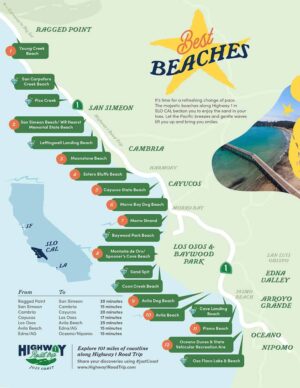
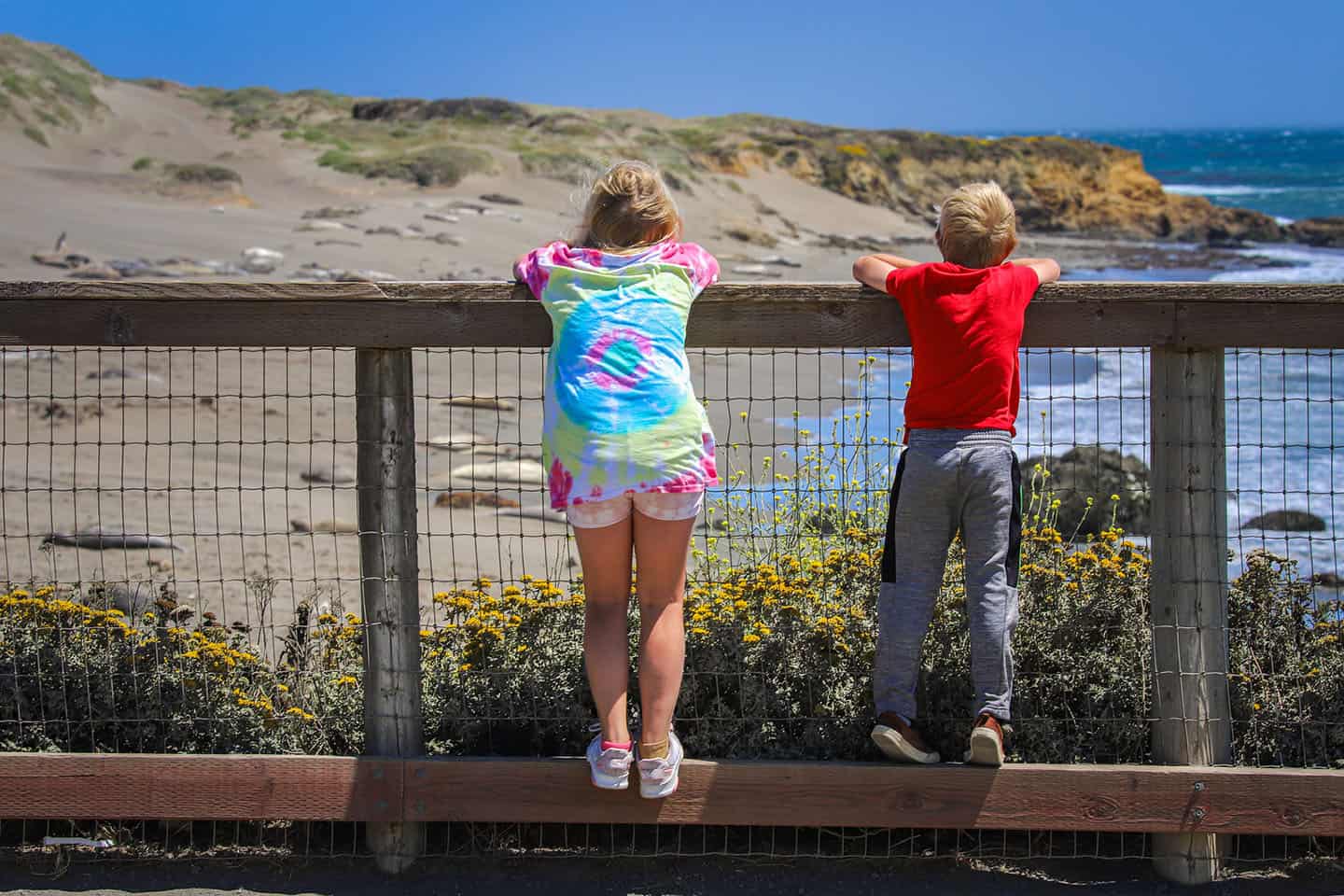
These quieter, equally stunning stretches south of Big Sur offer dramatic cliffs, majestic elephant seals, historic lighthouses, wild beaches and charming small-town dining that provide a slower, more intimate Highway 1 experience. Ragged Point, San Simeon, Cambria and the coastal towns between Big Sur and Nipomo offer everything Monterey promises but without the parking stress, dense crowds and buzz of activity.
You’ll want to check Highway 1’s status before committing to the coastal segment between Big Sur and Ragged Point—this stretch closes periodically due to storms, landslides and construction, sometimes for weeks or months at a time. If the coastal road is closed, two simple detours keep your Highway 1 adventure moving: from Monterey, take US-101 south, then cut west on CA-46 to reach Cambria. From there, pick up the south-coast itinerary through San Simeon, Cayucos and beyond. You’ll miss Big Sur’s dramatic cliffside views but still experience the region’s best coastal towns and attractions while actually enjoying the journey.
An overnight stay in Cambria or San Simeon transforms the experience entirely—slow down with a spa service, view local wildlife and savor dining experiences that only unfold when crowds thin. Here, sunrise and sunset viewpoints wow without rushing. Pair Hearst Castle (a 2 to 3-hour experience) with the Elephant Seal Rookery (30 to 45 minutes) and a Piedras Blancas Light Station tour for a full, varied day that mixes architecture, wildlife and coastal views.
Pro Tips:
- Plan an overnight in Cambria or San Simeon for slower mornings and easy wildlife viewing
- Pair Hearst Castle with Elephant Seals and a lighthouse stop for a complete south-coast experience
- Check Highway 1 status before committing; if closed, use US-101 and CA-46 as your backup route
- Visit tide pools at low tide and wear closed-toe shoes with good grip on rocky shores
FAQ
Got questions before you go? Here are the answers to the planning questions we hear most often, plus a few insider tips to help you make the most of your day.
How long does the Monterey Bay Aquarium take?
Most first-timers should plan three to four hours minimum, longer if catching feedings at the Open Sea or Kelp Forest. Check the daily schedule when you book your tickets so you can anchor your visit around moments when animals are most active.
Do I need a reservation?
Yes, timed-entry tickets are strongly recommended, especially on weekends, holidays and school breaks. Walk-up availability is limited and often sells out by mid-morning on busy days. Reserve ahead through the official website to guarantee entry at your preferred time.
Where should I park?
The Cannery Row Parking Garage at 601 Foam Street is closest and most reliable for Aquarium visitors. Surface lots on the hill above Cannery Row serve as overflow on peak days. For Old Fisherman’s Wharf visits, use the waterfront lot near 201 Washington Street. The free MST Trolley connects downtown and Cannery Row if you’d prefer to skip driving.
Can I bring food?
No outside food is permitted in exhibit areas, but abundant restaurants and cafes sit within a five to ten-minute walk on Cannery Row and at the Wharf. Eating outside the Aquarium also gives you a mental reset between gallery sessions.
Which exhibits are must-see?
The Kelp Forest, Open Sea, Into the Deep, Sea Otters and Touch Pools/Splash Zone deliver the most memorable experiences. Check the daily schedule for feedings and talks at these exhibits, and plan your route to catch them during peak activity times.
Is the Aquarium stroller and wheelchair-friendly?
Yes. Elevators connect all floors, and free wheelchair loans are available at entry with ID. Accessible routes guide you through major exhibits, and family restrooms and nursing areas appear on the map provided at entry. Confirm current accessibility details when you call ahead to book your timed-entry tickets.