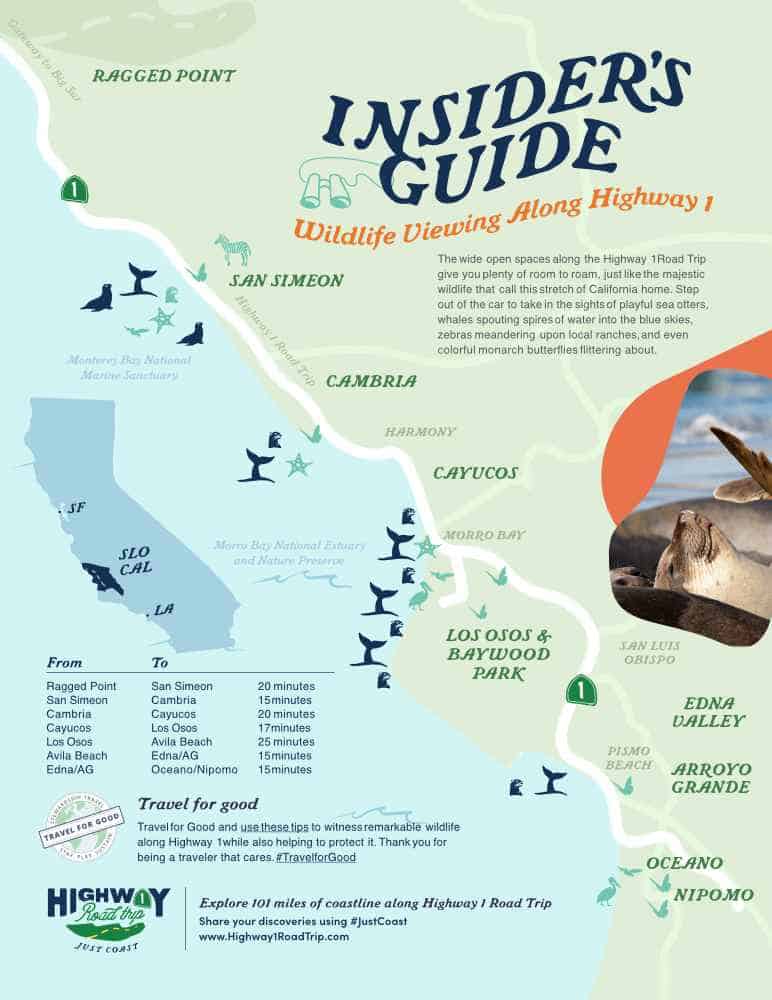


A single spout transforms the entire horizon—suddenly the ocean feels alive. Pull into one of the six signed Whale Trail viewpoints along Highway 1 and you could be in for an unforgettable encounter: migrating gray whales cresting in winter and spring, humpbacks and blues gliding past in summer and dolphins, sea lions and otters offering year-round entertainment. That sudden splash—the slap of a massive fin against the surface—signals one of Highway 1’s most majestic moments and sets the tone for whale watching from San Simeon to Pismo Beach. Chase that thrill across San Luis Obispo County, home to more Whale Trail sites than any other county in California. From Cambria’s rugged bluffs to the calm waters near Avila Beach, these Highway 1 whale watching spots are surprisingly easy to reach, with parking, clear paths and interpretive signs that help you understand exactly what you’re seeing. Bring layers and binoculars, then use the sections below to choose your viewpoint, time your visit and learn how to scan the water like a local.
See the Whale Trail
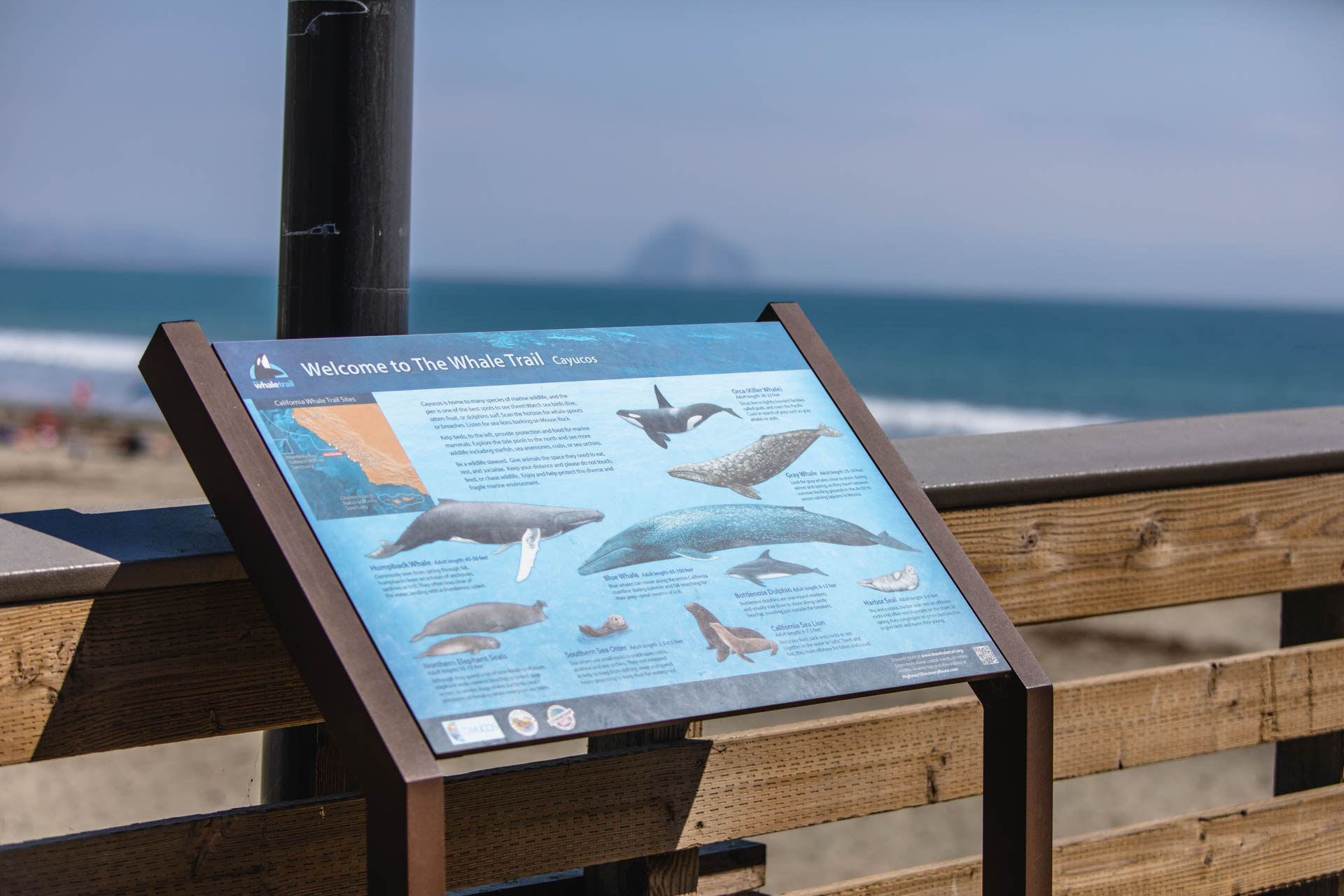
What is the Whale Trail
As you wind down Highway 1, the Pacific unfolds—vast, vibrant and full of surprises. Think of the Whale Trail as your insider map to the best whale watching spots along the coast. This network of signed, shore-based viewpoints highlights reliable places to scan for whales and marine life—no special gear or experience needed. Just pull in, read the interpretive panel and let the horizon do the talking.
San Luis Obispo County hosts more Whale Trail sites than anywhere else in California, making it one of the top whale watching Central Coast destinations along Highway 1. These iconic viewpoints stretch from Pismo Beach’s golden sands to San Simeon’s rocky shoreline and Cambria’s windswept bluffs, each offering easy access and clear sightlines.
And the best part? Many stops provide parking, short paths and detailed panels that explain which species you might see and when they tend to migrate through this stretch of coastline.
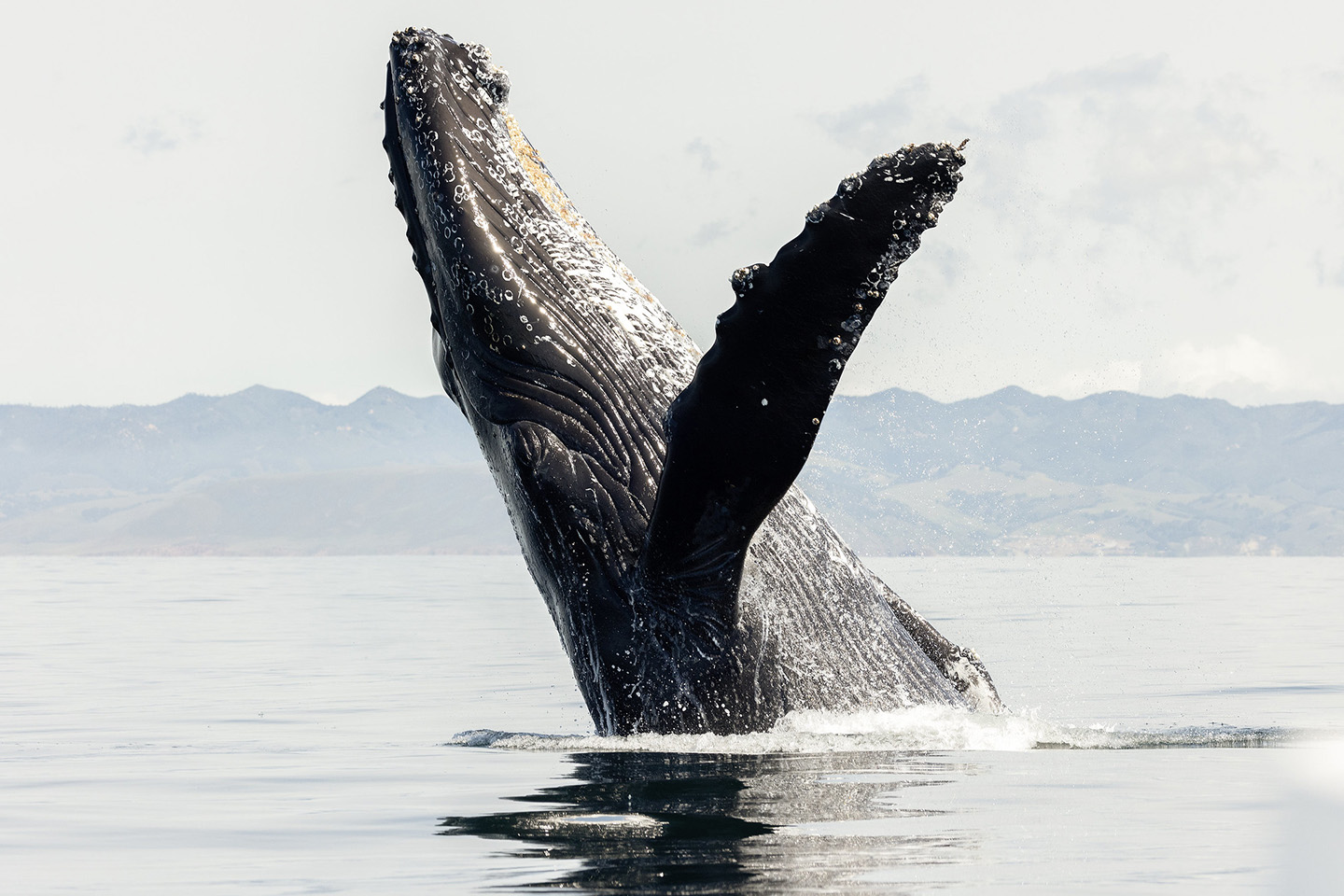
The idea is simple: park once, absorb the information in the panel, then make slow, patient sweeps across the horizon for five to ten minutes before shifting your angle or settling in to linger a bit longer. With any luck, you’ll spot that signature breach: a surge of sea water and whale launching skyward, before crashing with a dramatic splash.
Pro Tips
- Keep the sun at your back when possible for better contrast against distant spouts.
- Alternate naked-eye horizon scans with binocular checks to pick up faint blows you might otherwise miss.
- Check out the Coastal Discovery Trail for even more incredible destinations located nearby Highway 1’s best Whale Trail stops.
Best Time to See Whales
Along Highway 1, the whales follow the seasons, and so should you. Here’s what you’ll likely encounter as the year unfolds:
Winter (Dec–Feb): Southbound gray whales make their grand journey, and blows are frequent enough from shore that even first-timers spot them. This is one of the most reliable times for whale watching in San Simeon, especially in calmer morning light.
Spring (Mar–May): Northbound gray whales return, often with calves traveling closer to shore than usual. This is prime land-based viewing season at piers and low bluffs—ideal for whale watching in Cambria or catching close passes along the Cayucos shoreline. Mothers and calves hug the coast for safety, which means better sightings for you.
Summer (Jun–Aug): Humpbacks arrive with their signature acrobatics, and in strong upwelling years, you’ll see blue whales offshore following the krill bloom. Bright morning conditions make this a standout time for whale watching at Pismo Beach and other elevated Central Coast whale watching viewpoints.
Fall (Sep–Nov): Humpbacks can linger into early fall, and you’ll start catching early gray whales heading south. Afternoon visibility often improves as fog lifts, giving you clearer horizons for slow, patient scans.
Year-Round Companions: Dolphins, sea lions and otters appear consistently from most signed viewpoints, offering reliable wildlife moments no matter the season.
Pro Tips
- Mothers and calves often travel closer to shore in spring, improving land-based sightings at spots like Cayucos and San Simeon.
- Cambria, Cayucos and Montana de Oro all offer excellent low-bluff vantage points for whale watching Central Coast style—slow sweeps, calm seas and wide-open horizons.
What to Bring
Whale watching along beautiful Highway 1 is its own reward. That said, you’ll want to pack light and smart to make the most of your experience. Layers are your best friend on California’s Central Coast—mornings start cool, afternoons warm up and wind can shift quickly as the day unfolds. Bring a hat to shade your eyes and help block glare, sunscreen for longer viewing sessions, a full water bottle and snacks to enjoy a picnic by the sea.
Binoculars are optional but highly recommended—they’ll help you pick up distant spouts and confirm what you’re seeing along that vast blue horizon. A phone or camera should allow you to capture the moment, though the memory often outshines the photo. Remember, you can always use this guide as a quick-reference tool for whale identification on the go.
Pro Tips
- If it’s windy, find a natural wind break and steady your binoculars against a railing or rock for sharper views.
- In keeping with these handy Highway 1 wildlife viewing tips, follow a slow-scan approach—relax your eyes, sweep the horizon in short sections and pause on anything that disrupts the surface.
San Simeon: Old San Simeon Pier and Cavalier Boardwalk
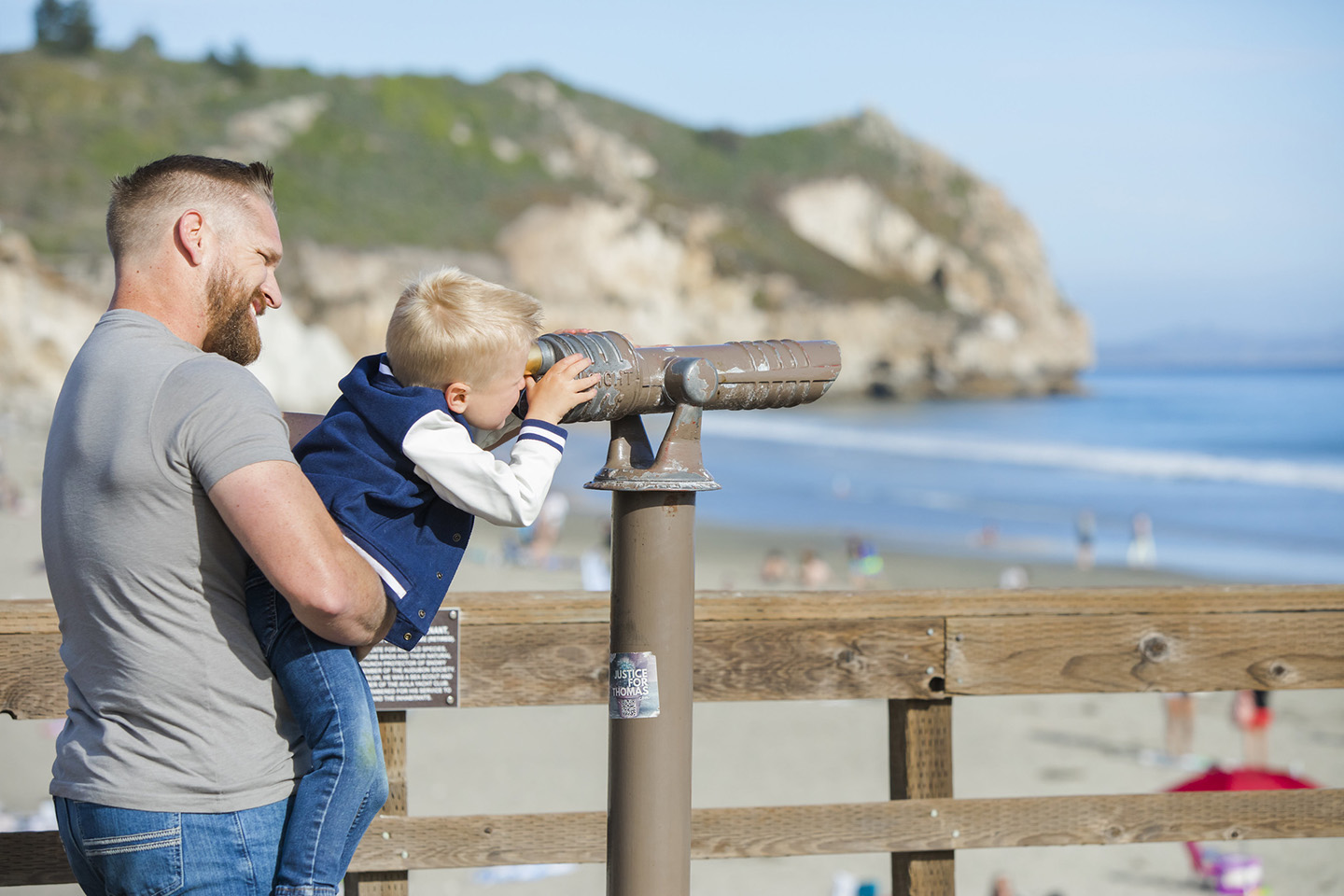
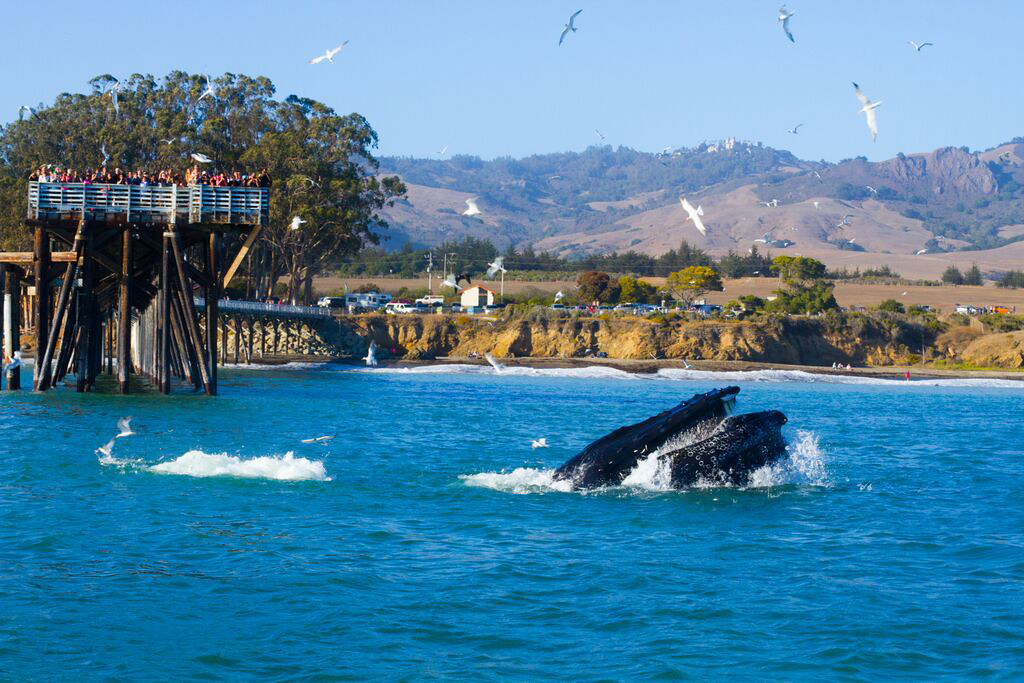
Embark on a shoreline adventure where every slow scan of the water is full of promise. San Simeon offers two excellent signed Whale Trail sites, each offering a different mood. The Old San Simeon viewpoint sits beside William R. Hearst State Beach, where you can wander the pier for elevation and shifting angles. Just down the road, the Cavalier boardwalk features three public telescopes—a welcome surprise for whale watchers without binoculars and a fun upgrade for those who travel with them.
Both spots feel welcoming and easy to navigate. The Coastal Discovery Center near the pier adds a family-friendly touch, an ideal place to pick up guides or ask questions of the staff. Before you go, confirm the pier’s current status, as occasional maintenance happens.
Expect steady sightings here: massive gray whales and minke whales glide past on most visits, often joined by harbor seals, sea lions and sea otters bobbing through the kelp. On luckier days, a majestic humpback breach or rare orca fin may break the surface without warning—scan long enough and the ocean tends to reward your patience. The rich marine ecosystem here makes this one of the most dependable whale watching stops along Highway 1.
Pro Tips
- Gray whales head south in fall and winter, then return north in late winter through spring. Other species can appear year-round.
- Start at the Coastal Discovery Center, then walk the pier for changing vantage points and better elevation.
- For more context, explore William R. Hearst State Beach to understand how the shoreline supports such active marine life.
Cambria: Shamel Park to Moonstone Beach
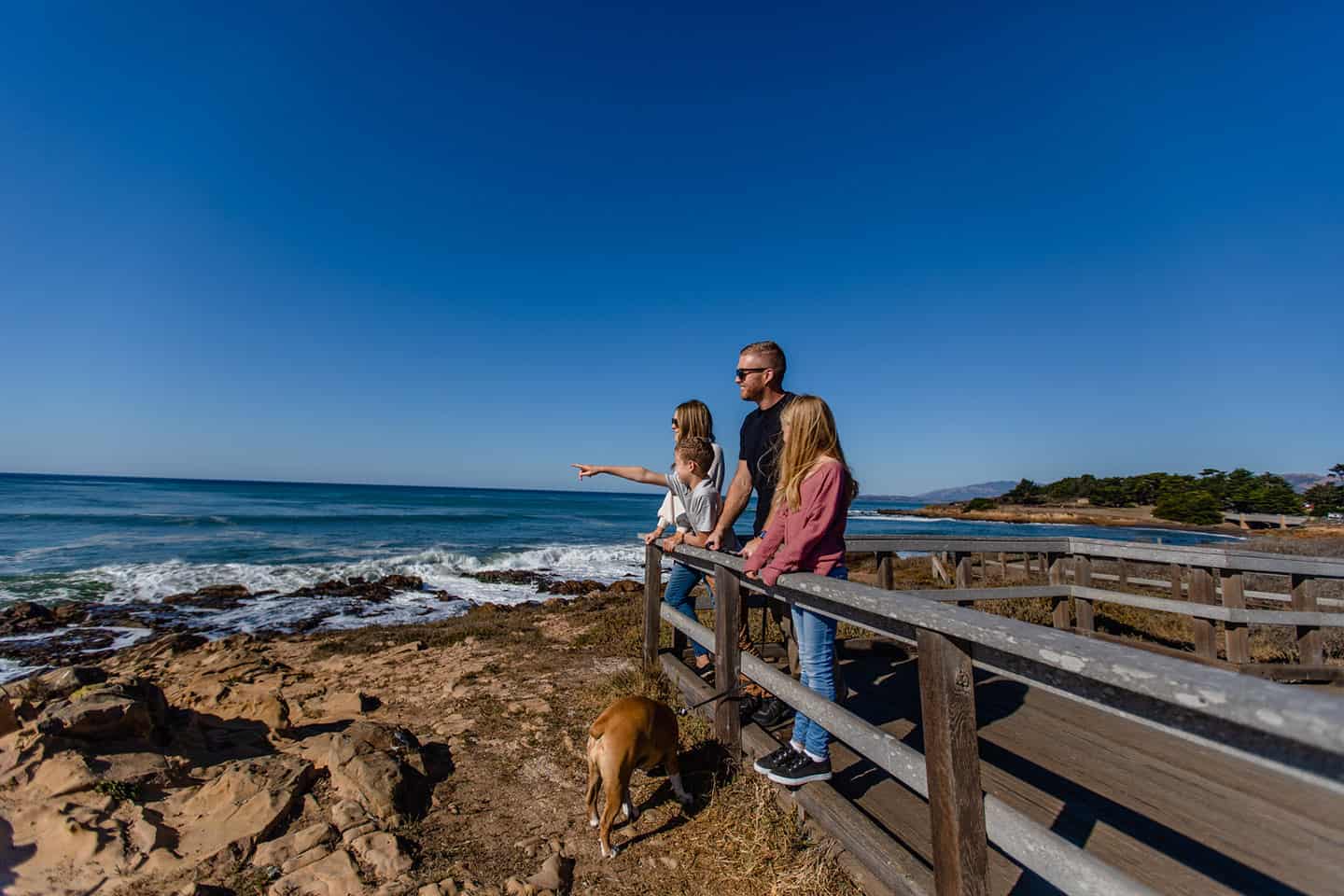
Settle into the scene at Shamel Park, where the wide horizon at Moonstone Beach seems to stretch out for you alone. This six-acre coastal access point offers easy parking and paths that guide you straight to the signed Whale Trail panel facing the open water. From here, you’re ideally positioned for slow, unhurried scanning.
The park itself adds a welcome bonus: seasonal swimming pool, children’s play area and picnic facilities keep all ages happy. Linger with family or sip your morning coffee while watching the ocean shift from morning to afternoon. This is the Central Coast whale watching you’ve been waiting for. The beach walk is gentle, the views are generous and the wildlife variety is consistently strong.
Expect gray whales emerging in winter and spring, joined by Pacific white-sided dolphins, sea lions and sea otters weaving through the kelp. Humpbacks and minke whales appear occasionally, while harbor porpoises round out the cast. Enjoy the coastal kaleidoscope: each visit feels slightly different depending on the light, the tide and the season.
Pro Tips
- Gray whales migrate through December to April. Many other species remain active year-round.
- If winds rise, wander a bit north or south along the boardwalk to discover a natural wind break.
- Make time for nearby Moonstone Beach Cambria to explore some of the area’s best bluff-top viewpoints.
Cayucos: Cayucos Pier + Estero Bluffs
Step onto the old Cayucos Pier and feel history creak beneath your feet. Built in 1872 by founder Captain James Cass, this beloved pier features a signed Whale Trail panel with parking close by, making it one of Highway 1’s most accessible whale watching stops. Stroll along the weathered planks where pier railings make a natural brace for steady binocular scanning.
When whale watching Cayucos in spring, the sights abound: mothers and calves hug the shoreline on their northbound journey, offering some of the closest land-based viewing opportunities on the Central Coast.
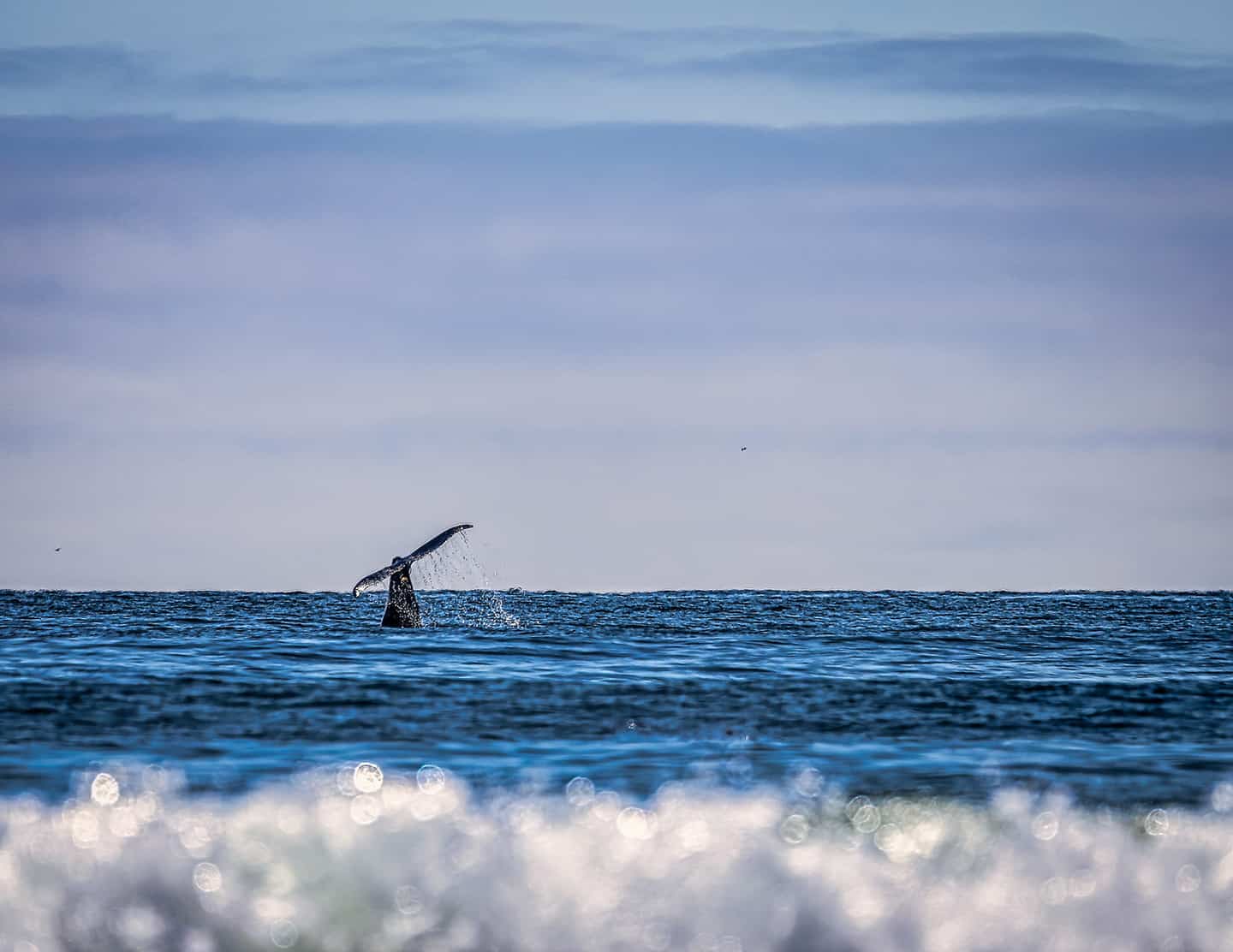
Late spring and summer see humpbacks putting on a spectacular show—dramatic breaching, tail-fluking and slapping the ocean’s surface with powerful fins that echo across the water. You’ll find that these majestic creatures throw their entire massive bodies clear of the water in one explosive moment of pure joy.
Harbor seals, sea lions, sea otters and the occasional orca add to the scene, while the nearby tidal pools invite discovery of colorful sea urchins, anemones, crabs and starfish.
For elevation and wider sightlines, step up to Estero Bluffs just north of town. These rugged bluffs rise dramatically and give you a high perch to watch the whales’ migratory path as it unfurls offshore. Pair a morning at the pier with an afternoon at Estero and you’ll experience two complementary perspectives in one outstanding Cayucos adventure.
Pro Tips
- Use the pier rail to steady your binoculars.
- Compare pier viewing with bluff-top scanning at Estero Bluffs State Park for a broader horizon.
Los Osos–Baywood: Montaña de Oro Bluff Trail
Embrace the call of Montaña de Oro’s gilded cliffs, crashing surf and wide-open sunrises. For striking whale watching at Montaña de Oro, head to this iconic state park where the signed Whale Trail location sits along the Bluff Trail, about 1.65 miles from the trailhead near Spooner’s Cove. Yes, there’s a little hiking involved, but the payoff is worth every step: stunning elevation, panoramic views and a genuine sense of adventure.
The wildlife here will take your breath away: gray and humpback whales are the stars of the show, but otters can be found rolling through the kelp, seals haul out onto rocks, dolphins thread through clear waters and seabirds soar overhead.
For even higher altitude, Point Buchon offers a cliff-top viewpoint with striking drop-offs and uninterrupted views of Montaña de Oro State Park and the azure waves beyond. Access comes via the Point Buchon Trail, and the early bird truly gets the worm here—the trail limits total daily hikers to 275 people, so arrive early and you’ll have the bluffs mostly to yourself.
Pro Tips
- Start early in the day to secure parking and catch calmer air before afternoon winds pick up.
- Parking capacity can be limited at Point Buchon, so be aware of your arrival time.
Avila Beach: Avila Beach Pier
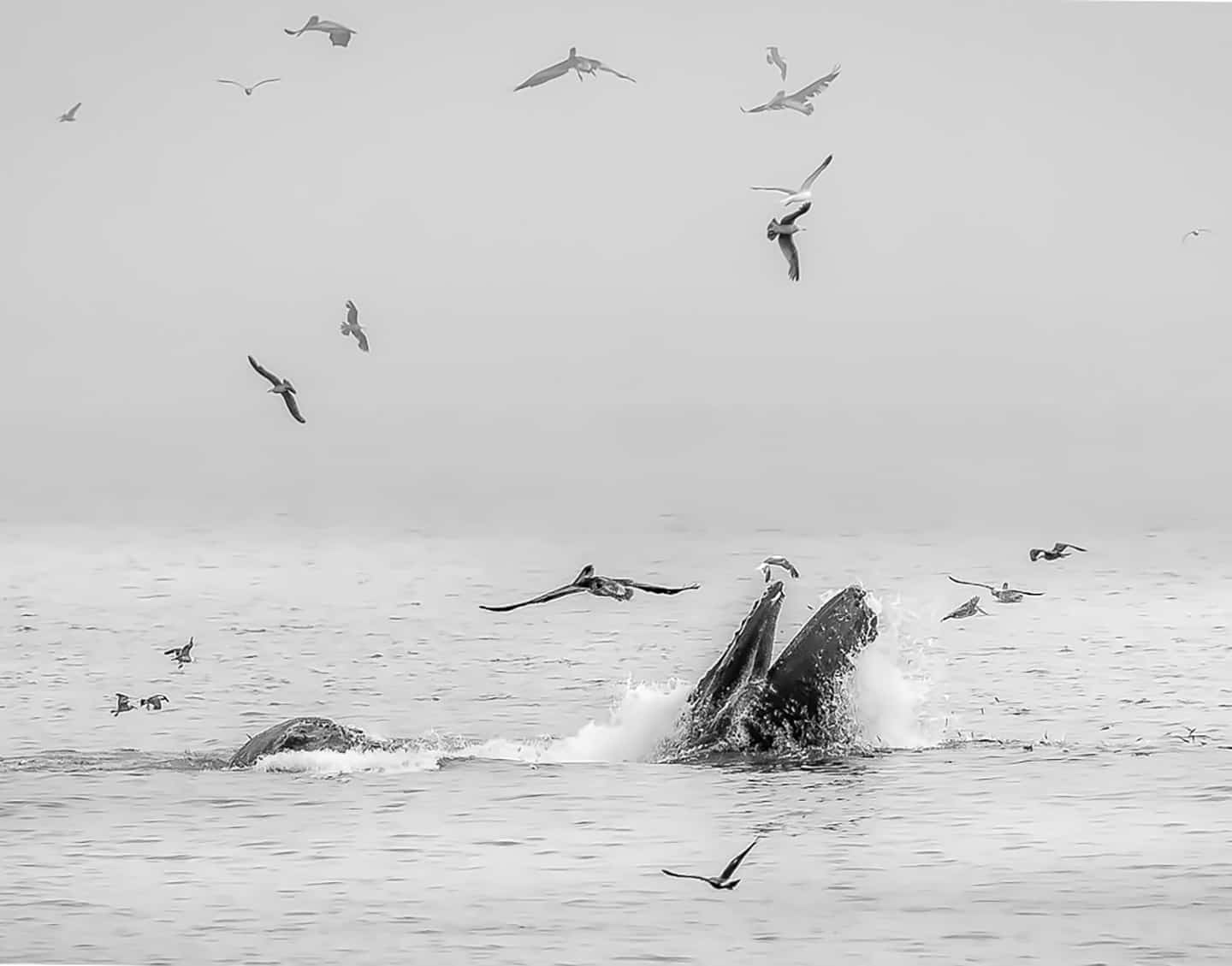
Gray and humpback whales feed in these protected waters seasonally, and their distinctive blows can often be heard rising above the crash of the surf. Watch for that telltale heart-shaped blow—these giants announce their arrival long before you spot them. Claim a tranquil spot on the pier while locals cast fishing lines into the water below.
Mornings tend to offer lighter wind and smoother seas, making Avila Beach whale watching a favorite among newcomers and seasoned watchers alike. Once you work up an appetite, simply grab a bite nearby. In Avila Beach, watching can easily blend into a full beach day or a slow lunch in town.
Pro Tips
- Pair a morning pier scan with a lazy afternoon harbor stroll.
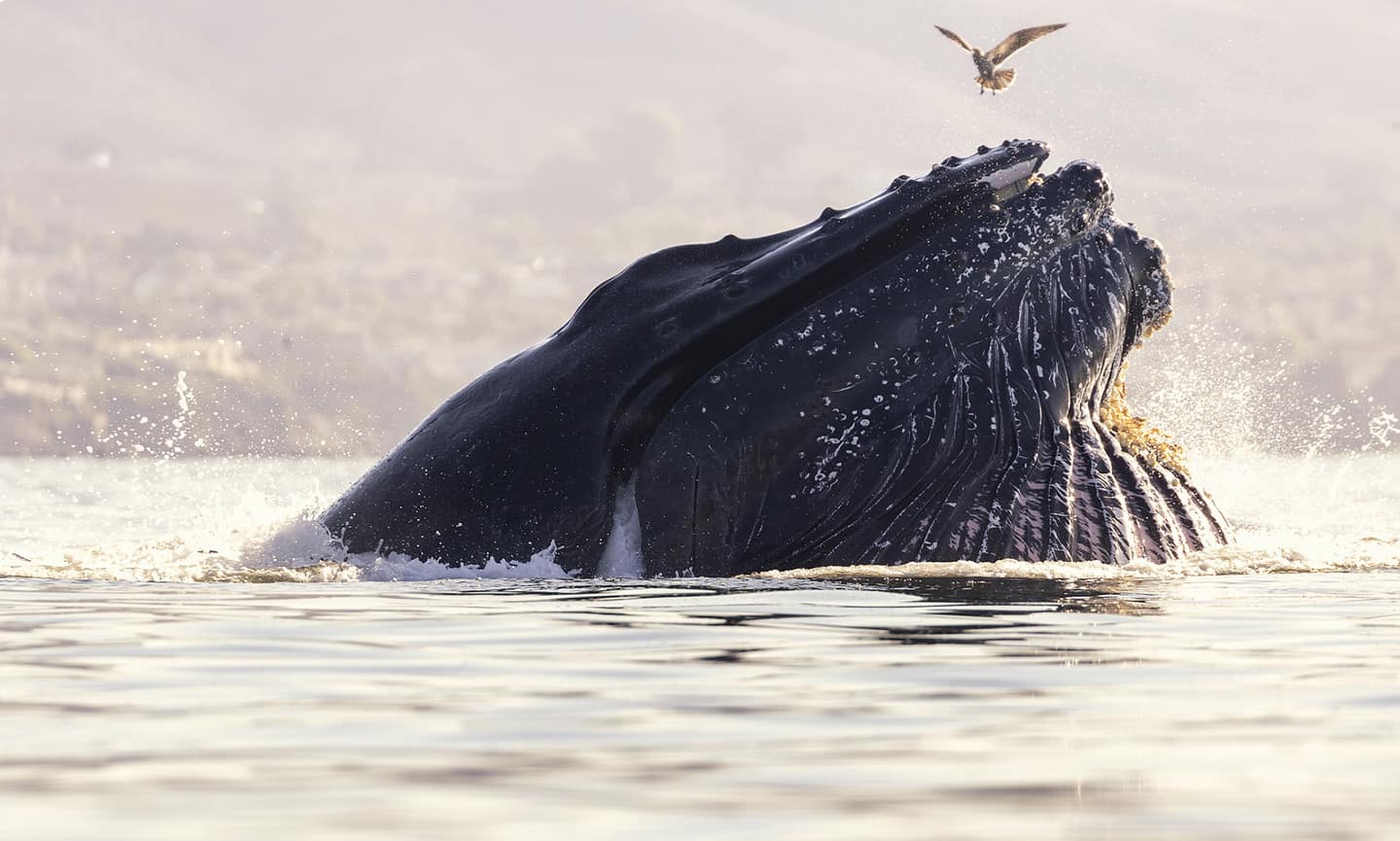
Oceano & Nipomo: West Grand Avenue Overlook
The best time for whale watching at Pismo Beach is when you follow the gray whale migration and humpback patterns. In Oceano and Nipomo, every scan of the horizon feels like you’re in on a secret. Follow locals to the West Grand Avenue overlook for a wide open horizon ideal for spotting the slap of a pectoral fin on the water. Tucked beside the parking area at Fin’s Seafood at Pismo State Beach, this signed Whale Trail stop is straightforward and accessible, far from the crowds yet close to the action.
Gray whales migrate through from December to April, and humpbacks patrol deeper waters much of the year. Be sure to keep your eyes open for feathered wildlife here—pelicans and gulls hunt these waters for their next meal.
Morning light tends to offer the cleanest visibility when it’s right, and even a short session can reveal a fluke, fin or tell-tale spout if the timing is right. Relax into the rhythm of this secluded oasis: slow down, breathe in the salt air and behold Highway 1’s luxuriously laid-back coastline.
Pro Tips
- Arrive early on weekends, the best time for whale watching at Pismo State Beach area, to avoid crowds and make the most of calmer morning winds.
- For a more immersive experience, nearby Pismo Beach Pier and Plaza offers additional perspectives along the shoreline.
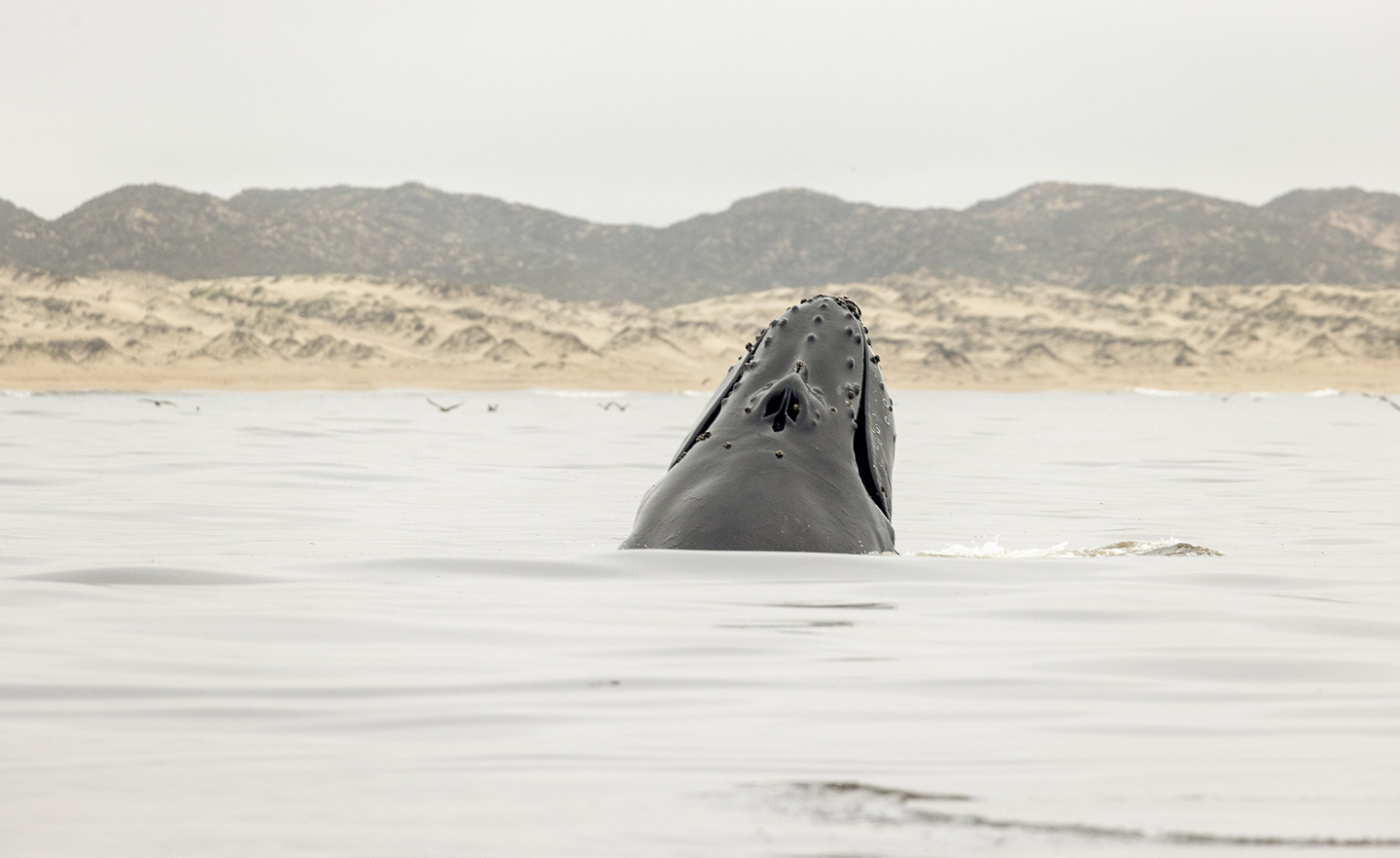
Whale Watching Tours
Get closer to the action. With Highway 1 whale watching tours, discover the thrill of massive flukes emerging yards from your boat. Now you’ve entered the realm of these majestic creatures—an experience you simply cannot experience from shore.
Go beyond the breakers and experience the epitome of Highway 1 whale watching: guided whale watching tours take you directly into the whales’ feeding grounds where gray, humpback and blue whales rise, dive and surface in steady succession.
Typical whale watching tours run 2.5–4 hours depending on conditions, giving you ample time to settle in, scan the horizon and enjoy your moment on the water. Wildlife moves all around your boat: dolphins skim the bow, sea lions bob through the kelp and seabirds track the action from above.
It’s a fresh perspective on Central Coast whale watching—one that can bring you unexpectedly close to these gentle giants of the deep.
Morro Bay Departures
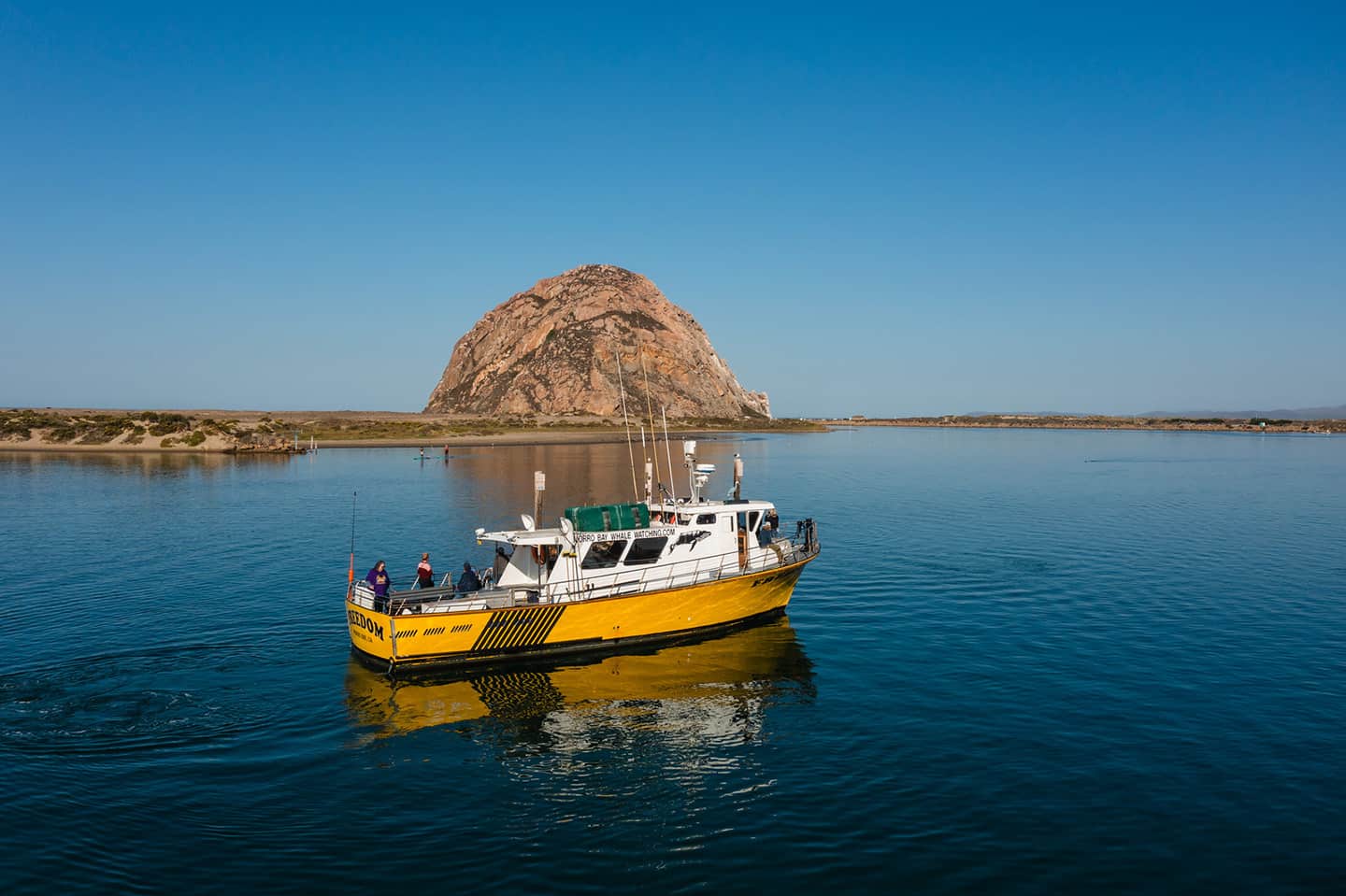
Morro Bay Whale Watching on The Freedom
Find out what years of experience can bring to your whale watching tour. This veteran operation departs from Morro Bay Landing and is known for skilled skippers who know the ropes when it comes to tracking local marine life. Trips focus on finding whales wherever conditions are best, with a spotlight on education, responsible wildlife practices and memorable encounters with marine mammals and seabirds. It’s a great fit for those who seek knowledgeable narration and the thrill of discovering what’s beyond the harbor mouth.
Sub Sea Tours & Kayaks
A family-owned company woven into everyday life on the bay, Sub Sea Tours brings an easygoing, welcoming feel to their whale watching experiences. Their crew lives and breathes Morro Bay’s waters—surfing, paddling and exploring long before and after tours. Their fleet includes traditional whale watching vessels, an underwater viewing boat and a variety of kayaks and SUPs, giving their operation a community-oriented, hands-on vibe. Expect loads of local insight and a sense that you’ve submerged into their coastal stomping grounds.
Avila Beach / Port San Luis Departures
Avila Beach Ocean Safaris – departs Harford Pier Public Dock
Avila Beach Ocean Safaris offers an up close, small group wildlife adventure launching from Harford Pier at Port San Luis. Led by local captain and photographer Vincent Shay, these ocean safaris bring you right onto the water as you explore San Luis Bay and the Avila coastline in search of seasonal whales, along with dolphins, sea lions, sea otters, and seabirds. Choose a quick harbor safari, a longer whale-watching adventure, or a private charter for a more custom day on the water.
Avila Beach Whale Watching on the Pacific Flyer — departs Harford Pier
A longtime fixture in Avila, this company focuses on educational, nature-forward outings across San Luis Bay. Their tours highlight the area’s rich wildlife—whales, dolphins, porpoises, sea lions, otters and seabirds—and their team is known for combining professionalism with a relaxed, friendly approach. Their emphasis on creating meaningful experiences has earned them consistently strong reviews and a loyal following among locals and visitors alike.
SLO Tours on the Obispeno — departs Harford Pier
Move freely about the boat. SLO Tours operates a stable, comfortable catamaran designed for smooth sailing and panoramic visibility. Passengers can choose from bow seating, inside seating and walk-around decks, enjoying varied views of Fossil Point, Otter Town, Pelican Jetty, Sea Lion Rock and the outer reaches near Point San Luis Lighthouse. Outings here feel intimate, thanks to small group sizes and a crew that combines safety, connection and a relaxed pace. Plus, the Obispeno is also available for private charters, making it a favorite for families and small groups.
Conditions and Comfort Tips:
Morning departures often have lighter wind and smoother seas; afternoons can be breezier with chop. Ask operators about naturalists on board, their responsible viewing practices and recent sighting patterns before booking.
Stay warm and cozy on your Central Coast whale watching adventure. Dress in layers with a wind shell; bring water, snacks and a secure strap for phones and cameras. If you’re motion-sensitive, choose larger vessels, sit near the stern and keep your eyes on the horizon—it helps.
Pro Tips
- Reserve ahead for weekends and holidays; mid-week trips can be less crowded and feel more intimate.
- Call the operator the morning of your trip to confirm conditions and expected species.
- If seas are rough, switch to shore-based viewing at a signed Whale Trail site that day instead.
Lighthouse Lookouts
Climb to new heights and see it all from a bird’s eye view. Explore Highway 1’s coastal lighthouses, where panoramic viewing areas reveal the froth of distant blows against open water. Be sure to remember that hours and access vary, while some areas require guided tours. That said, the views from above are always worth the trek.
Piedras Blancas Light Station (San Simeon)
No Highway 1 whale watching adventure is complete without a stop at this historic site, just north of San Simeon. Expect sweeping coastal views and clear sightlines to offshore waters where whale spouts rise against the open sky. Pair it with a visit to the nearby elephant seal rookery for extra wildlife fun, or treat it as its own focused stop. There’s plenty to take in.
Pro Tips
- Expect strong wind; bring layers and secure your hat so it doesn’t become part of the scenery.
- A telephoto lens or binoculars help you track spouts beyond the nearshore kelp.
- Discover more about access at Piedras Blancas Light Station before you go.
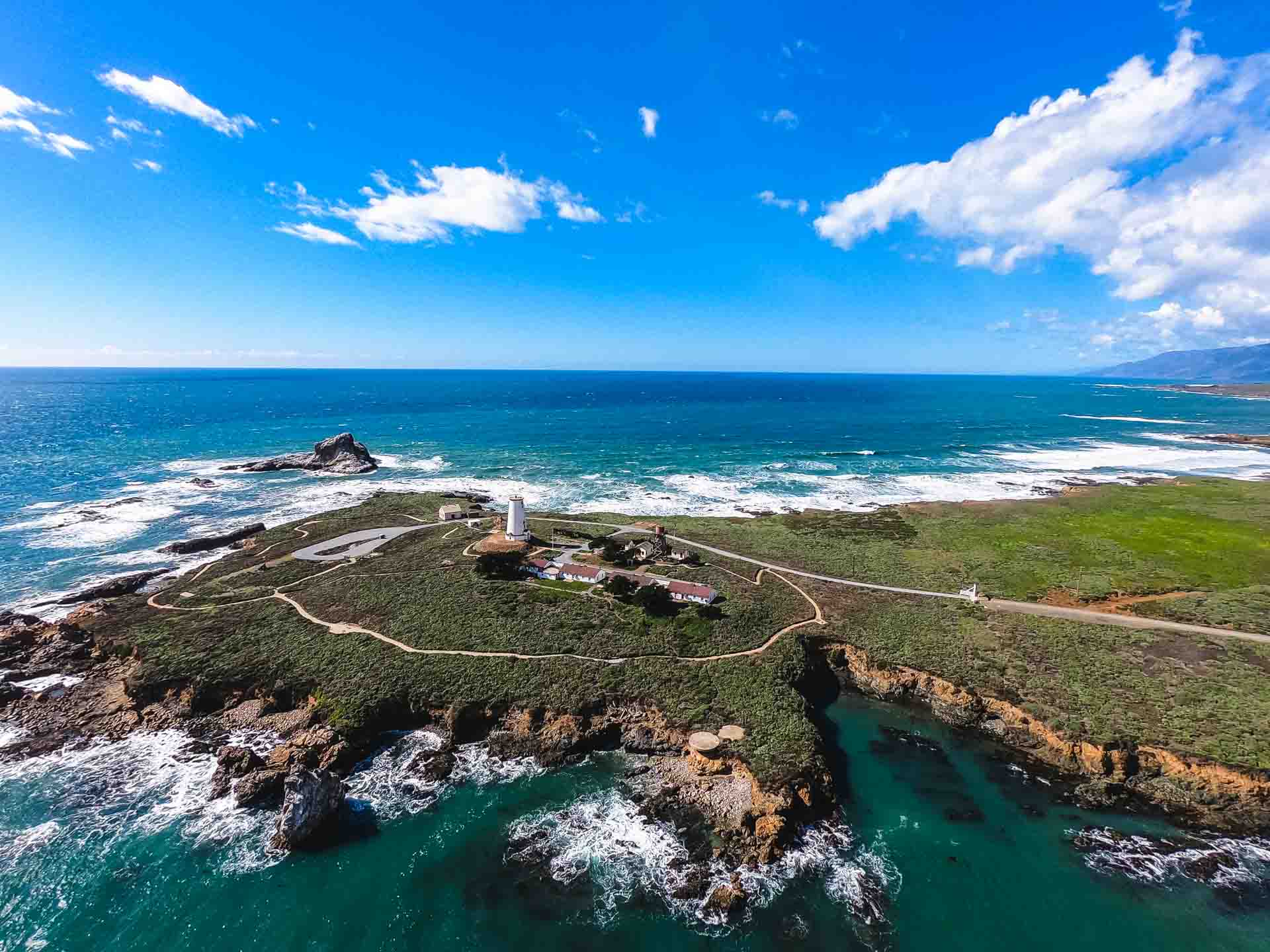
Point San Luis Lighthouse (Avila)
Uncover whale watching grounds rarely seen, even by the locals. Perched on a scenic cliff-top near Avila, this tucked-away lighthouse grants breathtaking sightlines across the sparkling bay. You’re now privy to those deeper waters where whales surface along their migratory routes. That said, be aware: access typically comes via guided tour or designated open hours, so confirm timing in advance.
Pro Tips
- Build in extra time for the shuttle or hike component if tours require it.
- Late afternoon often brings brighter horizons as fog lifts, revealing distant blows.
- Visit Point San Luis Lighthouse for tour details and seasonal hours.
Nearby Elevated Vantages
Rise above the coastline and feel the everyday world fall away. Highway 1’s high-perch whale watching viewpoints deliver awe-inspiring altitude and expansive views, ideal for those who prefer scanning the sea from above.
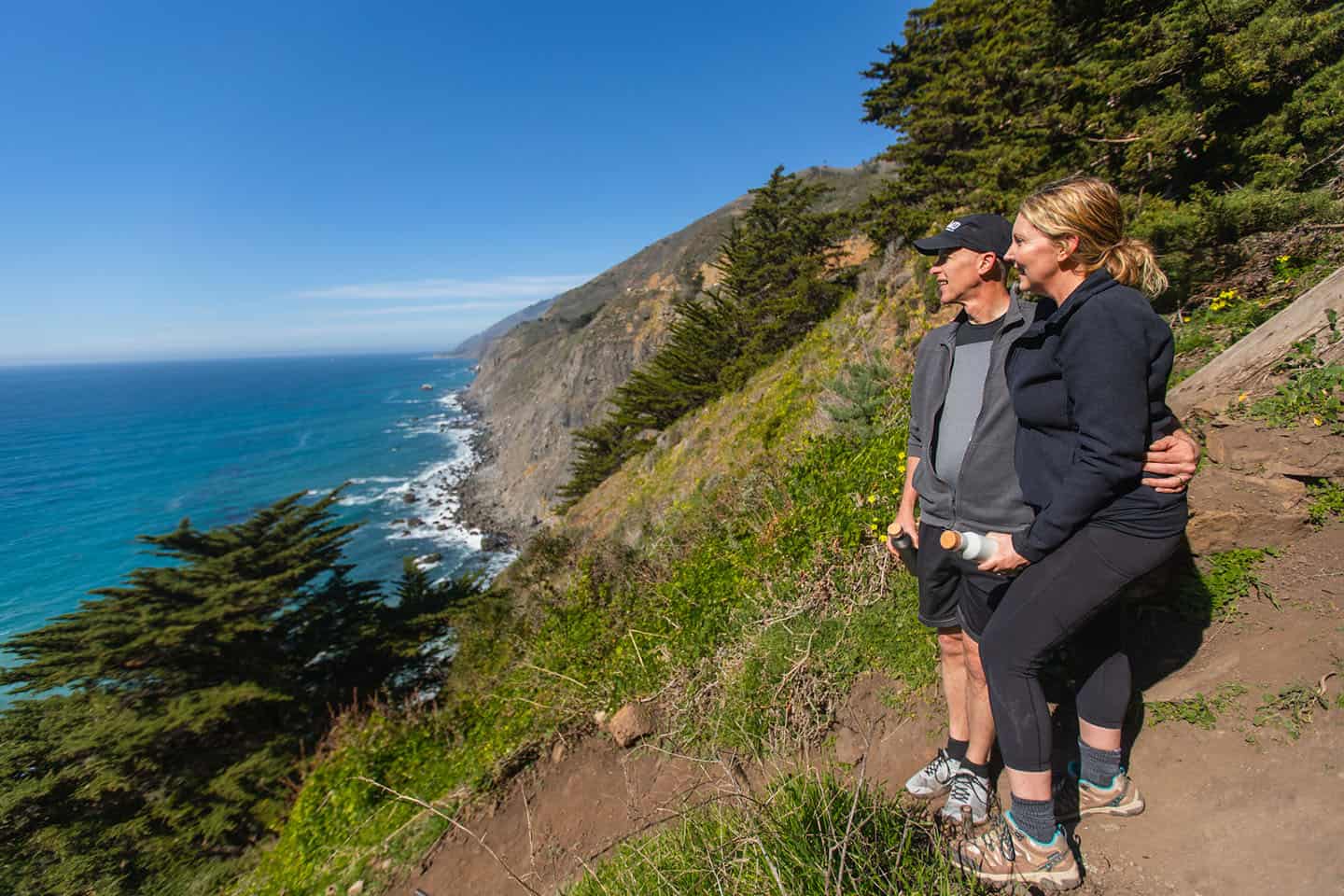
Head to Ragged Point, just north of San Simeon—and prepared to be wowed. Here at the edge of the world, you’ll discover an unmatched cliff-side vista for whale watching (not to mention sunset-viewing). Park near the Ragged Point Inn on the west side of Highway 1 and stroll toward cliffs backdropped by the Pacific horizon. Keep watch for minke whales, gray whales or the odd humpbacks or orca. Rarely will you leave disappointed, as pods of dolphins are known to loop along the water’s surface, their acrobatics visible from the bluffs. Sometimes whale watching is just patient silence and the soft sound of the waves crashing below.
For a rugged blend of flora and fauna, the Fiscalini Ranch Preserve in Cambria is a winning spot to gaze along the windswept coast. Stand still for long enough and nature’s stillness erupts into a lively display of birds, otters and passing whales. Enjoy unobstructed sightlines along pristine coastal bluffs (the trailhead sits at 2799 Bluff Trail in Cambria), and remember that your patience will be rewarded. Multiple benches and unobstructed views appear along the way, so you can find your perfect perch and settle in for a spell.
Pro Tips
- Keep a respectful distance from cliff edges.

Stewardship Travel for Good
The ocean keeps most of its secrets, but every now and then, it reveals a scene that takes your breath away. As you chase whales along the coast, be sure to embrace Stewardship Travel for Good tips along the way. You’ll soon feel your connection with the Pacific deepen.
As you take in the salt-flecked sights and sounds of Highway 1, keep a respectful distance from wildlife. Use binoculars or zoom instead of approaching. Keep to signed paths, boardwalks and railings—don’t climb fences or step onto unstable bluff edges. Obey posted closures and seasonal protections. Drones aren’t appropriate around wildlife or crowded viewpoints.
A gray whale’s spout catches the morning light, a reminder that Highway 1 is full of wild residents that need your attention. You have the power to heed this call. When choosing tours and outfitters, ask about their responsible viewing practices. Now you can better appreciate this precious ecosystem as you watch whales move through the very waters you’re now working to protect.
Not every whale watching adventure brings a breach or a spout, but every visit brings you closer to understanding why these creatures matter so much.
Pro Tips
- Share the rail and rotate prime spots so everyone gets a turn at the best vantage.
- Teach kids to spot with eyes first, then binoculars. It builds skill and patience.
Resources and Preparation
Set yourself up for success. Check conditions, gather gear and map out your perfect Highway 1 viewing route. Before heading out, look up tides, wind forecasts and any park advisories. If you’re road-tripping to multiple viewpoints, confirm Highway 1 status so you’re not surprised by road closures.
The right preparation lets you embrace every moment—whether the sea is calm and glassy or textured with wind. Morning and late afternoon often bring softer light and calmer air, ideal for spotting and capturing photographs.
Pro Tips
- Mornings and late afternoons usually bring calmer wind and softer light, which makes spotting easier and photos better.
FAQ
What is the Whale Trail and why use it here?
A network of signed shore-based viewpoints that highlight reliable places to scan for whales and marine life. This corridor along Highway 1 includes multiple marked sites with interpretive panels explaining species and seasons, so you know exactly what you’re looking for and when.
When are whales most visible from shore?
Gray whales migrate past in fall and spring; humpbacks and other rorquals show in summer with the krill bloom; dolphins, sea lions and otters appear year-round.
Which San Simeon stop is best for first-timers?
The Cavalier boardwalk offers three public telescopes plus easy boardwalk viewing. Old San Simeon adds pier access and the Coastal Discovery Center for families who want a little education with their whale watching.
Are there signed sites near Pismo?
Yes. A Whale Trail sign is at the West Grand Avenue overlook, and the Pismo Pier is also a Whale Trail location—though fair warning, it can get crowded.
Where can I get elevation for longer scans?
Try Estero Bluffs above Cayucos or Ragged Point north of San Simeon for big, high sightlines that reveal distant whales.
Do I need a boat?
No. Land-based scanning works remarkably well at these signed spots. Boat tours are optional extras if you want to get even closer.
Where can I find whale sightings today?
Call ahead to tour operators or check with the Coastal Discovery Center for current whale sightings and recent activity. Morning departures often report the freshest sightings, and operators can give you real-time updates on what’s been spotted along the Central Coast.