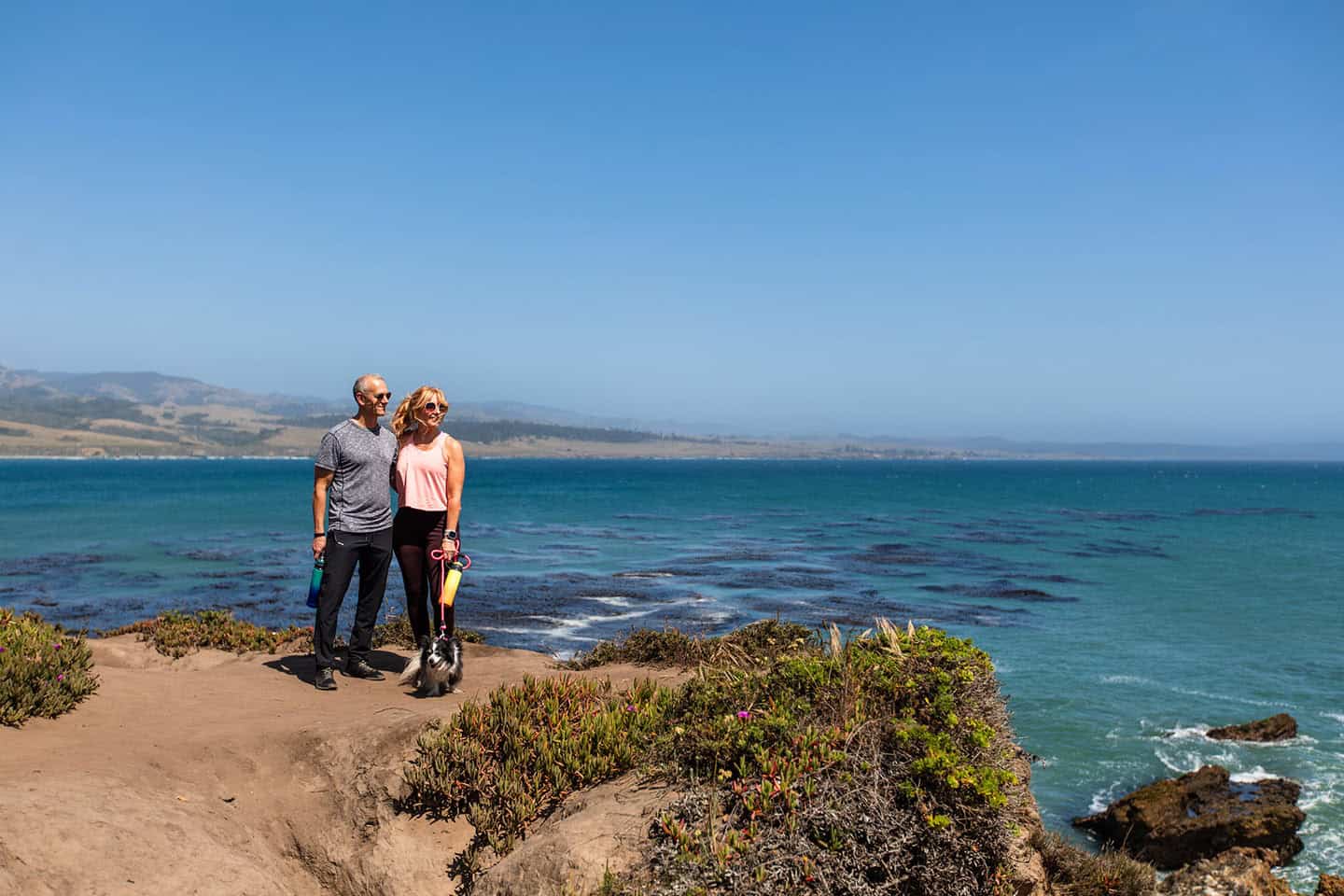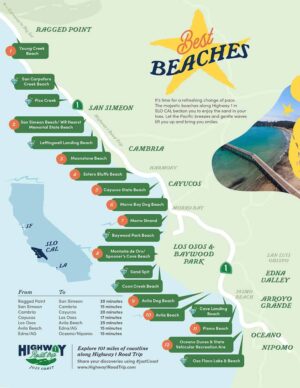


California’s Central Coast beckons travelers seeking the best outdoor activities Highway 1 has to offer. This diverse and picturesque stretch of coastline consistently ranks among the nation’s top destinations for outdoor activities—and for good reason. Whether you’re craving coastal hikes with panoramic ocean views, peaceful kayaking through protected waters, or thrilling surfing sessions at hidden breaks, the nature activities Highway 1 delivers are refreshingly accessible and authentic. What makes the fresh air so special here on Highway 1? For starters, this 100-mile corridor is virtually crowd-free, which allows visitors to connect with nature in a very real way. Each area here offers its own character, from dramatic cliffside trails to family-friendly beaches perfect for tidepooling. When it comes to outdoor things to do on the Central Coast of California, the diversity here is remarkable. Within a matter of a few hours, you can cycle through vineyard-dotted valleys, paddleboard calm bays where sea otters play, and wander through a secluded coastal oak forest.
Don’t believe it? Follow your wonder and come see for yourself.
Discover an Outdoor Adventure on Highway 1
Ragged Point & San Simeon
This dramatic northern “gateway to Big Sur” showcases rugged coastline where towering cliffs meet the Pacific in spectacular fashion. Wildlife lovers find themselves captivated by the area’s natural abundance, while photographers discover countless opportunities to capture California’s raw coastal beauty.
Start with the Bluff Trail at Ragged Point, which delivers breathtaking panoramas in under a mile. This steep but rewarding path descends switchback-style to a purple-sand beach where Black Swift Falls tumbles directly onto the shore. Sturdy hiking shoes are essential for this dramatic descent and the challenging return climb, so be sure to lace-up before starting your walk.
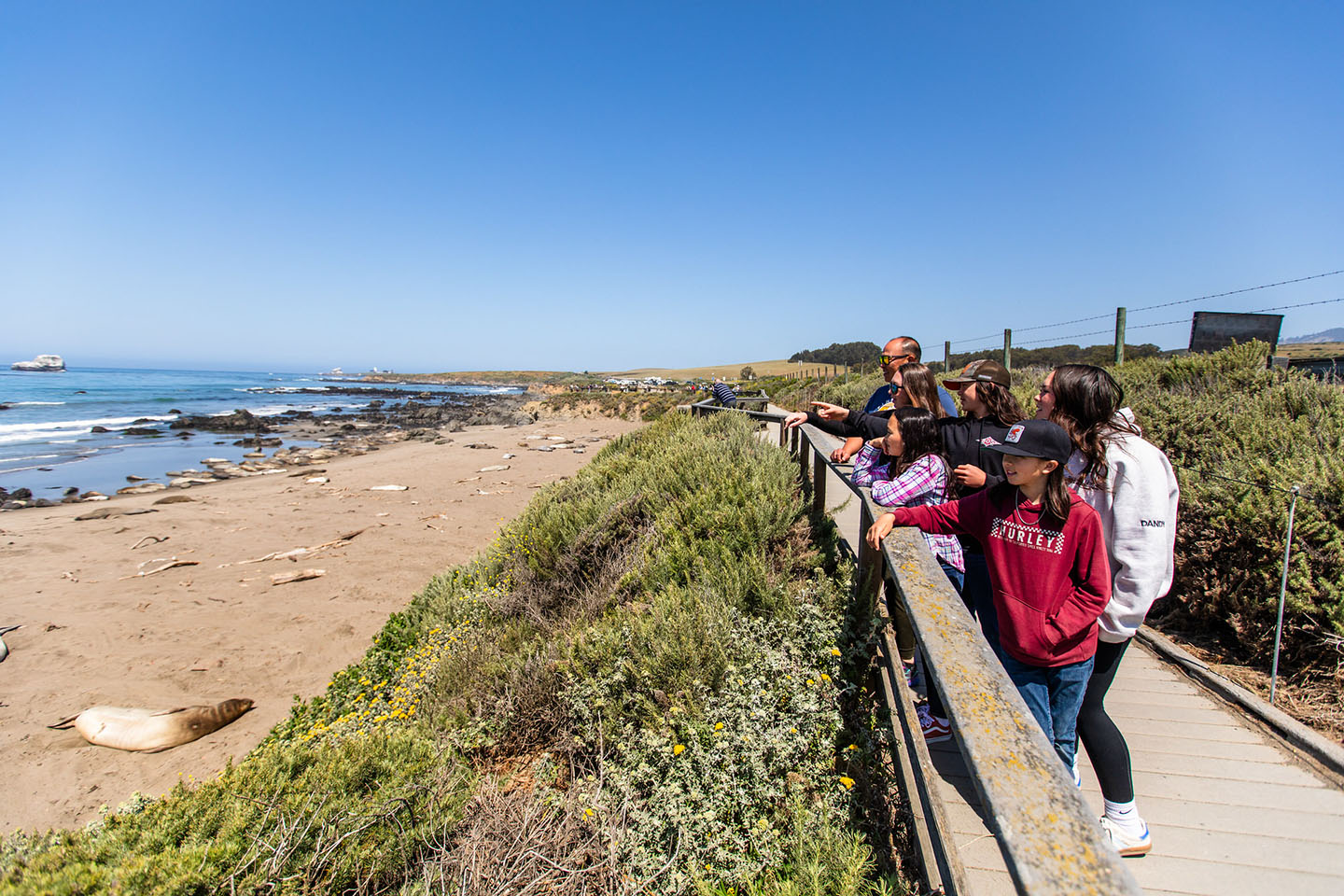
Just south, the world-famous Piedras Blancas Elephant Seal Rookery provides front-row seats to one of nature’s most compelling shows. Massive Northern Elephant Seals gather here year-round to mate, give birth, and molt within full view of elevated boardwalks. Volunteer docents share fascinating insights about these marine giants, making this free wildlife experience as educational as it is entertaining.
San Simeon Bay offers excellent beachcombing along Hearst Memorial Beach, where calm waters create ideal conditions for families. The sandy shoreline yields treasures like sea glass and interesting driftwood, while the adjacent Coastal Discovery Center provides marine life education and free binocular loans for whale watching.
Surfing enthusiasts should head to San Simeon Point, where consistent waves break over a rocky reef. This spot works best for intermediate-to-advanced surfers who can navigate the rocky bottom and occasional strong currents.
Want to take a walk? The San Simeon Creek Trail winds through riparian habitat where seasonal wildflowers bloom alongside the meandering creek. This gentle walk passes beneath towering eucalyptus trees while offering glimpses of the historic Hearst Ranch.
Cambria
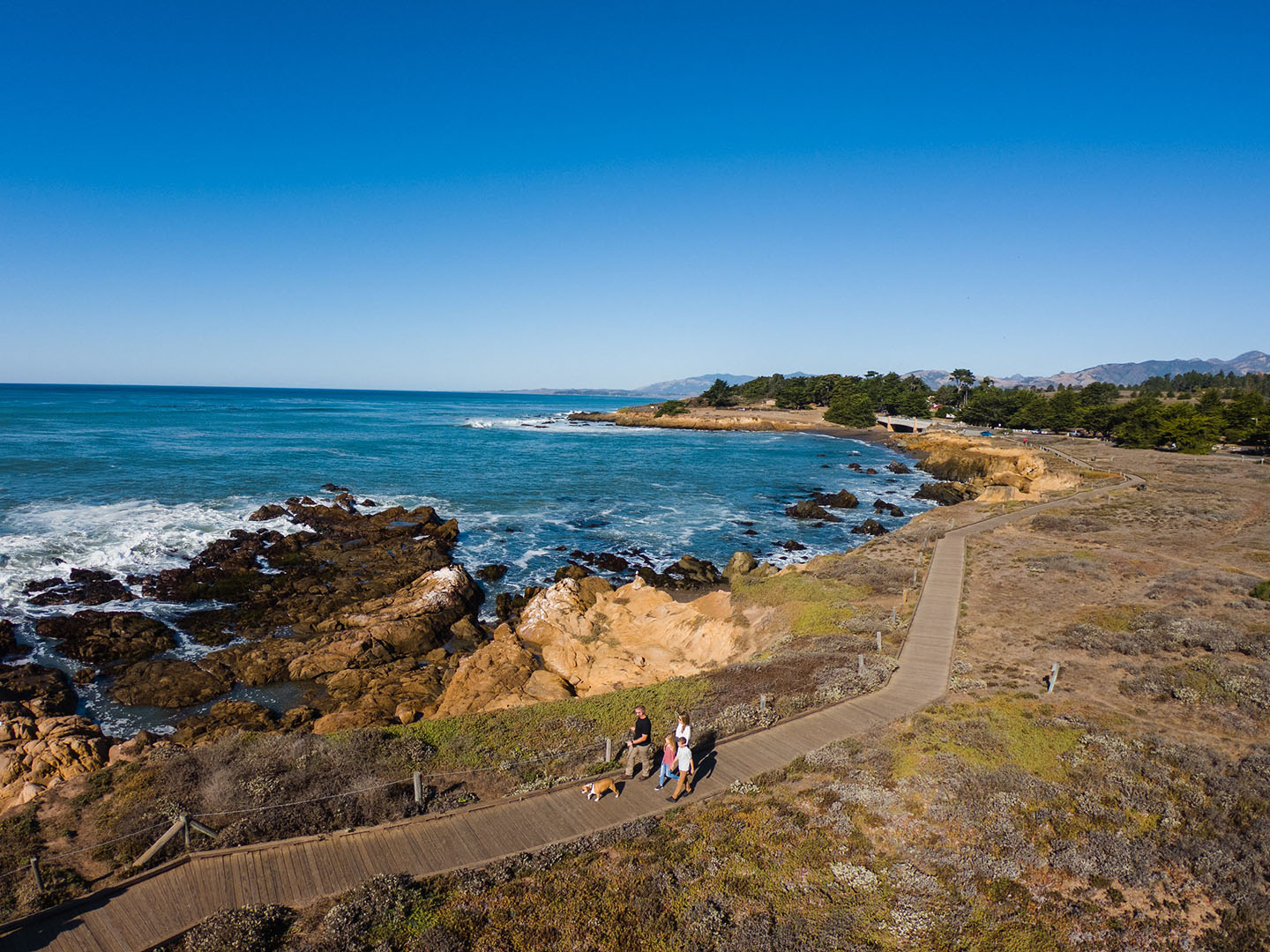
A picturesque seaside village with charm to spare, Cambria is a haven for artists, antique-seekers, history buffs and nature-lovers alike. The beloved boardwalk along Moonstone Beach stretches to spectacular bluffs where visitors encounter smooth stones, colorful sea glass, and towering waves. Connected to Moonstone Beach to the south, The Fiscalini Ranch Preserve protects 437 acres of unspoiled coastal habitat through community conservation efforts. Multiple trails wind through one of only five remaining native Monterey Pine forests, while the ADA-accessible Bluff Trail affords exceptional ocean vistas. Wildlife spotting opportunities abound here: watch for migrating gray whales, playful sea otters, and all manner of seabirds riding the salty breeze. This is also a great spot for wildlife photography and quiet contemplation. The preserve’s elevated trails take in sweeping panoramas while protecting sensitive habitats that support endangered species like red-legged frogs.
Tide pooling enthusiasts flock to the rocky shores near Leffingwell Landing, where low tides reveal bustling miniature underwater worlds. Purple sea urchins, bright orange sea stars, and hermit crabs inhabit these protected pools, like natural aquariums accessible to curious observers of all ages.
Looking to feel a tug on your line? Surf fishing along Cambria’s coast can yield rockfish, lingcod, and even seasonal salmon runs. Local anglers recommend early morning sessions when winds remain calm and fish are most active.
Cayucos
Everyone loves this laid-back beach hamlet that exudes California style. Right in the center of town, the historic Cayucos Pier extends into prime fishing waters where both novice and experienced anglers try their luck—without need of a license. Surf culture thrives here, too, thanks to multiple breaks that accommodate different skill levels. The waves near the pier are excellent for beginners, while more experienced surfers often head to “Studios” outside of town for powerful reef breaks.
Just minutes away, Estero Bluffs State Park offers easily-accessible coastal hiking just north of Cayucos. Seven unmarked pullouts along Highway 1 provide trailhead access to this tranquil state park where wide paths traverse grasslands with views of Morro Bay and iconic Morro Rock.
Got a four-legged friend in tow? Dog Beach welcomes pups to romp freely on expansive sands. This wide-open stretch gives dogs plenty of space to run, swim, sniff, and socialize off-leash while their humans soak up the view. A seasonal creek even flows through the dunes, providing additional play opportunities for water-loving dogs.
For kayakers, putting in at Cayucos gives access to protected waters where paddlers might encounter harbor seals, sea otters, and a wide array of marine birds. Rental equipment is readily available in town, making this an easy win for visitors eager to get on the water.
Los Osos & Baywood
This tucked-away treasure offers outstanding access to Montaña de Oro State Park and the serene Morro Bay Estuary. Here, outdoor enthusiasts find diverse landscapes teeming with life, ranging from the churning waters off the Pacific bluffs to peaceful back bay waters, just right for kayaking or standup paddleboarding.
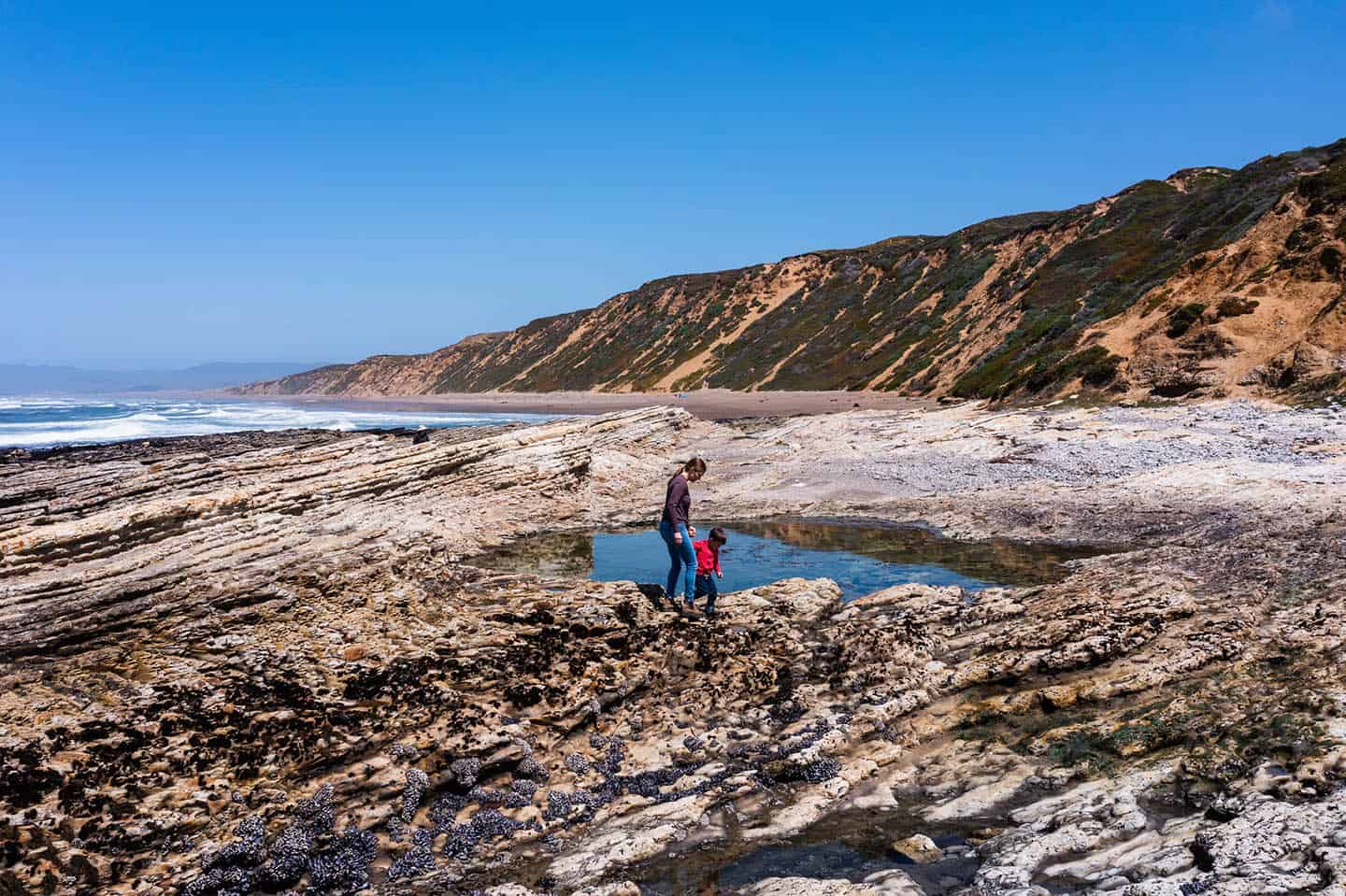
As one of the largest state parks in California, Montaña de Oro comprises 8,000 acres of pristine coastal wilderness, including Spooner’s Cove, a beach perfect for swimming, picnicking, and tide pooling. The protected cove offers calm conditions just right for families, while rocky areas harbor colorful anemones, sea stars, and other tiny creatures. Tide pools can also be found at Hazard Canyon Reef during low tides, where the rocky intertidal zone hosts abundant sea life like hermit crabs and even small octopi hiding among the crevices.
Valencia Peak challenges serious hikers with a steep four-mile roundtrip climb that rewards summit-seekers with 360-degree views encompassing the entire Central Coast. Want a gentler alternative? Follow the Bluff Trail for a three-mile coastal cliff walk with outstanding whale-watching possibilities.
On the northern side of Los Osos-Baywood Park, locals and visitors alike kayak through Morro Bay Estuary, a quiet aquatic world where paddlers glide silently among egrets, herons, cormorants, and other waterfowl. (In fact, this nationally-significant wetland supports over 250 bird species, making it a premier destination for birders and nature-lovers.) Paddleboarders also take to the calm waters of the Back Bay, perfect for beginners or those looking for easy conditions.
Want to feel like a giant? Try Los Osos’s Elfin Forest, an unusual ecosystem where full-grown oak trees remain miniaturized due to coastal salt exposure and sandy soils. A mile-long boardwalk loop makes this fascinating habitat accessible to all visitors while protecting sensitive plant communities.
Edna Valley & Arroyo Grande Valley
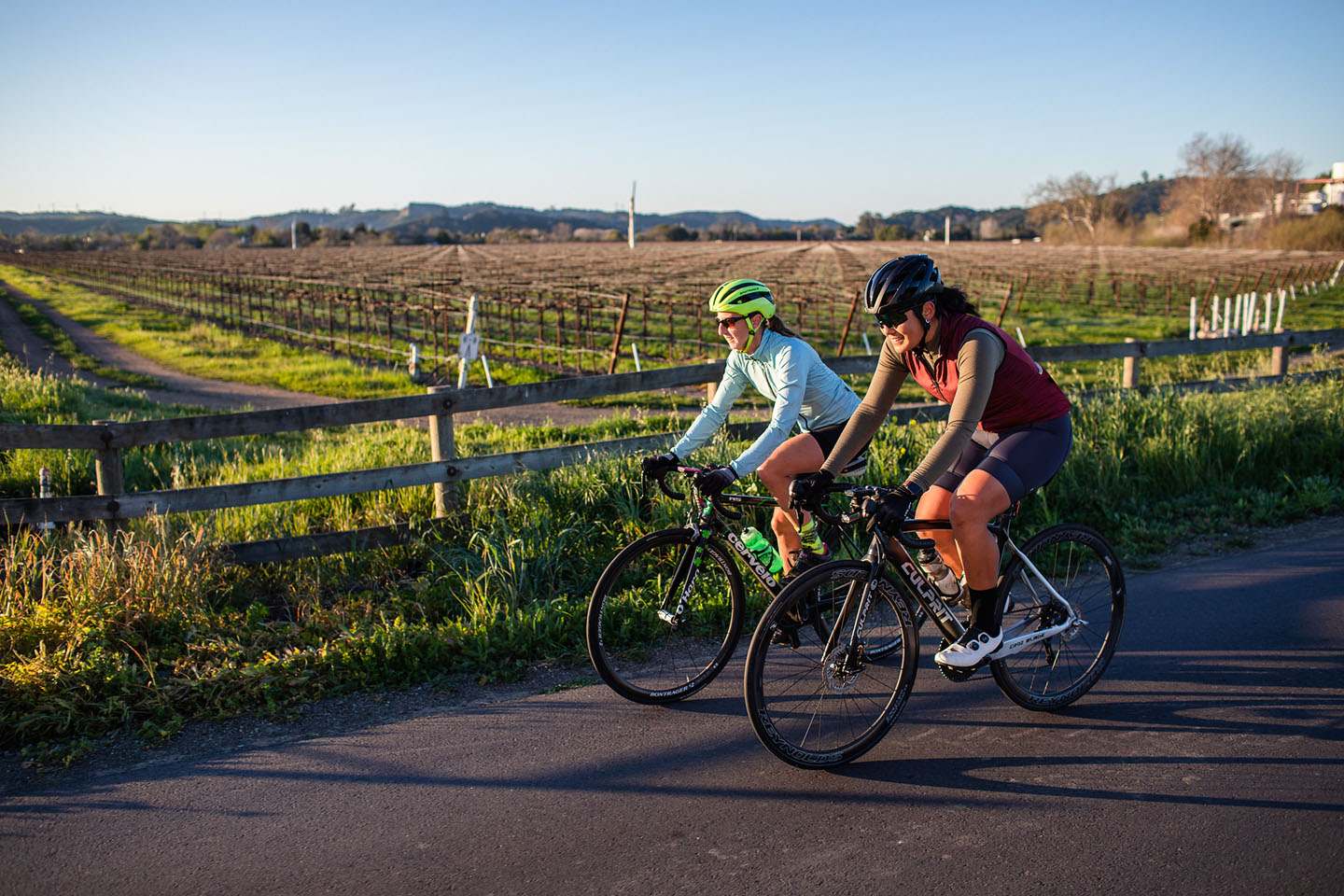
Though located inland from the immediate coast, these agricultural valleys are directly affected by their proximity to the ocean—a phenomenon that can easily be experienced through the area’s wines. But the temperate climate impacts more than just what the locals drink. In fact, it supports year-round outdoor activities. Among them is cycling through rolling vineyards, an excellent way to explore this picture-perfect region. Well-maintained roads wind through established wine estates where riders can stop for tastings and take in the sweeping valley views. The relatively flat terrain accommodates cyclists of varying fitness levels, which means anyone can join in the fun. Many tasting rooms feature outdoor patios where visitors can sample cool-climate Chardonnay and Pinot Noir while gazing across vine-covered hillsides toward distant volcanic peaks.
Further south, Lopez Lake State Recreation Area boasts 22 miles of oak-studded shoreline trails. Among them, the High Ridge Trail provides moderate exercise with scenic lake views, while fossil enthusiasts often discover ancient marine specimens embedded in surrounding rock formations. The lake also welcomes boaters, kayakers, and standup paddleboarders year-round, and is home to the Vista Del Lago Adventure Park (with ziplines and ropes courses) as well as the Mustang Water Slides.
For a slightly more urban outdoor experience, head west to Centennial Park in the Arroyo Grande Village, where a swinging bridge spans Arroyo Grande Creek. This iconic suspension bridge, built in 1875, is both historically significant and offers gentle, low-stakes (but nonetheless thrilling!) recreation for families exploring the downtown area.
Avila Beach
This sunny coastal destination benefits from some of the Central Coast’s most reliable weather, making it ideal for year-round outdoor adventuring. The conditions are calm for water sports and beachfront recreation thanks to the protected bay setting.
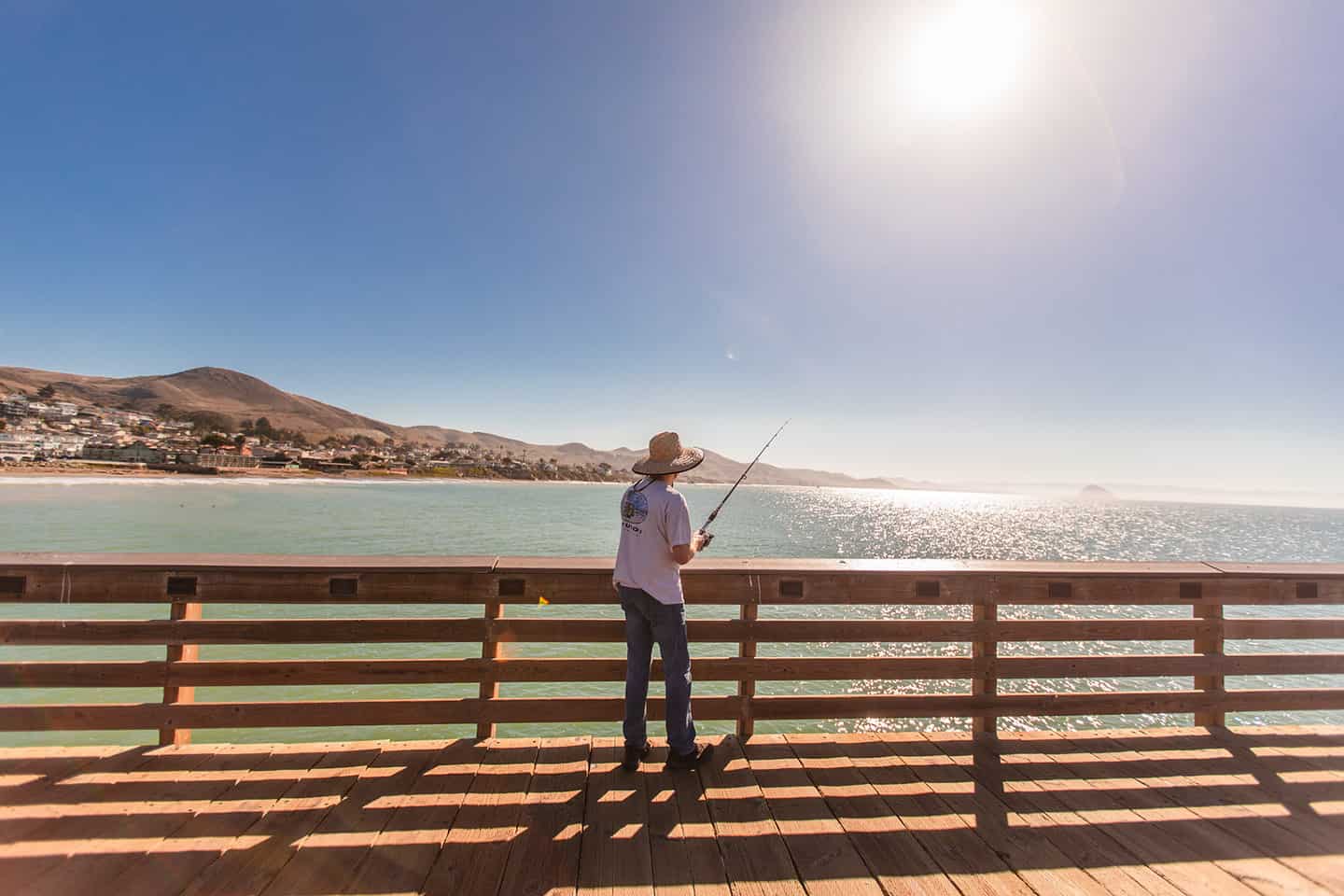
The Avila Beach Pier extends 1,685 feet into San Luis Bay, affording plenty of fishing opportunities and 360-degree coastal views. Better yet: it’s right in the center of town, perpendicular to the Avila Beach Promenade with shops, wine tasting, restaurants, and more.
Paddleboarding and kayaking in Avila Bay take advantage of consistently serene conditions protected from Pacific swells. (The same goes for surfing, too, though the waves are only big enough for beginners.) Find rental equipment readily available in shops along the Promenade, and enjoy glimpses of rays, harbor seals, and dolphins playing in the clear waters.
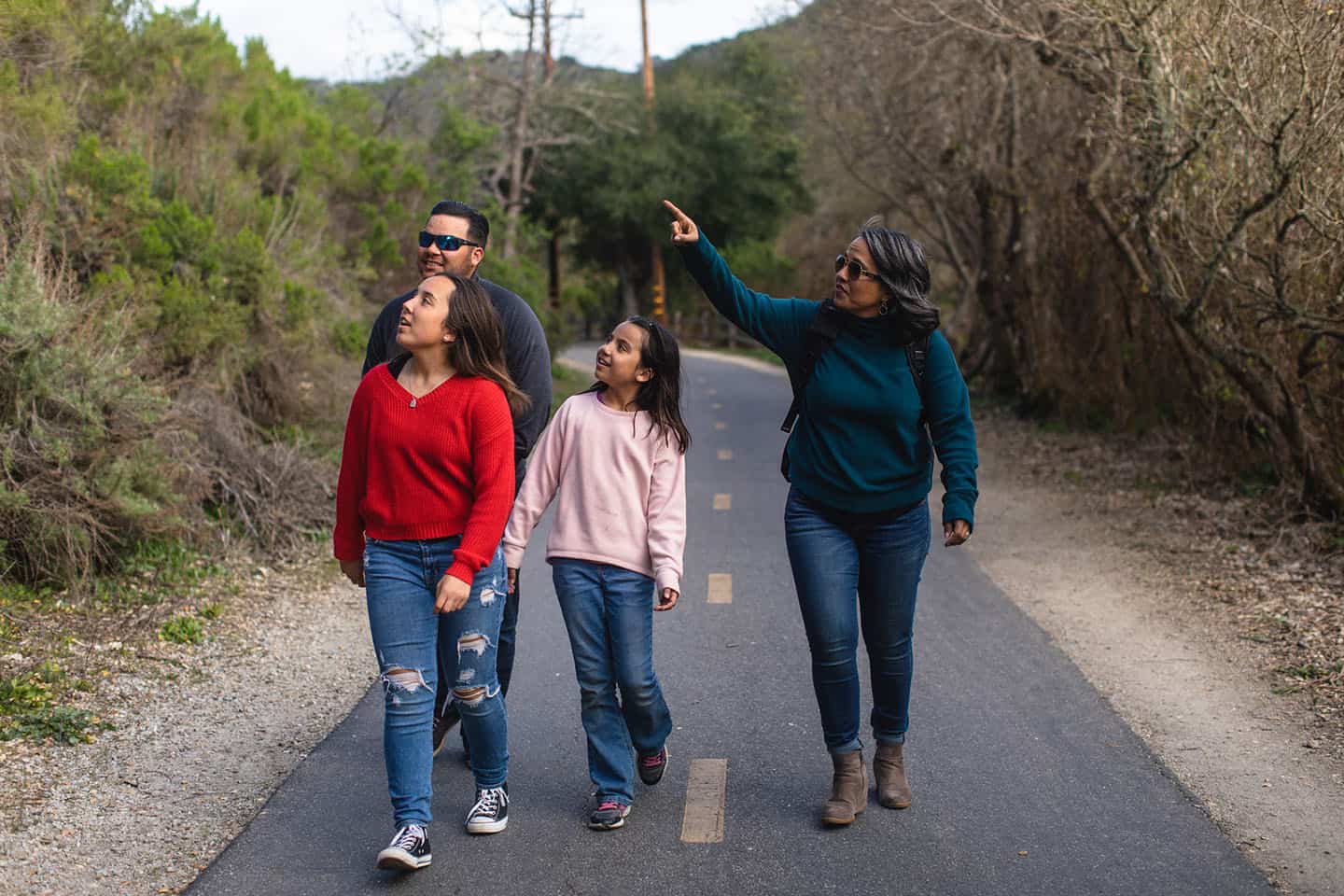
In the Avila Valley, Sycamore Mineral Springs attracts heat-seekers to its unique outdoor soaking experience in naturally heated pools. Discovered in the 1890s, these hot springs provide relaxing hydrotherapy amid gardens and oak groves, just minutes from the beach. Connecting these areas, the Bob Jones Trail follows San Luis Obispo Creek with a three-mile family-friendly route that accommodates bicycles, strollers, and wheelchairs. Pass through shaded riparian forests filled with sycamores and oaks, with only the sound of rustling leaves and the burbling creek as your soundtrack.
Oceano & Nipomo
Some of California’s most dramatic and sculptural landscapes can be found in the southernmost region of SLO CAL, where massive sand dunes meet pristine beaches in an ecosystem unlike anywhere else. Most famously, the Oceano Dunes State Vehicular Recreation Area allows visitors to drive directly onto the beach. Whether you’re interested in off-road vehicle adventures, beachcombing, or simply parking seaside for a picnic, this represents California’s only coastal driving experience.
Not into wheels? Try sandboarding down the towering dunes for thrilling desert-style recreation right beside the Pacific Ocean. These impressive sand formations can reach 500 feet and create natural sledding hills ideal for an age or ability. Or for those interested in seeing Oceano and Nipomo from the clouds, vintage biplane rides offer aerial perspectives of the undulating dunes landscape.
At Oso Flaco Lake Nature Preserve, find a spectacular boardwalk trail that crosses untouched wetlands before emerging onto an undeveloped beach. This easy 1.2-mile walk showcases diverse ecosystems and excellent bird-watching opportunities in one of California’s most significant dune complexes. Further inland at the Nipomo Native Garden, find 12 acres of plants indigenous to the Central Coast. Interpretive trails wind through native flora while educational displays explain the ecological relationships that sustain this specialized environment.


Stewardship travel for good
Responsible outdoor recreation ensures these natural treasures remain protected and available to future generations. The Highway 1 corridor offers numerous opportunities to give back while exploring, creating meaningful connections between visitors and the landscapes they love.
Examples include trail maintenance and beach cleanup initiatives that welcome volunteer participation year-round. Organizations like the Land Conservancy and local state parks also coordinate regular restoration projects where visitors can contribute meaningful conservation work while learning about coastal ecosystems.
Educational programs at visitor centers and nature preserves provide deeper understanding, as does participating in guided tours or interpretive programs and paying entry fees. But it doesn’t take a formal program or presentation to help steward the gift of Highway 1. You, too, can protect wildlife by respecting viewing distances for marine mammals, staying on designated trails to protect sensitive habitats, and following “Leave No Trace” principles during all outdoor activities. Even simple actions like packing out trash can work toward preserving these remarkable environments. Every little bit helps.
Final Tips & Plan Your Outdoor Adventure
Successful outdoor exploration along Highway 1 requires thoughtful preparation for changing coastal conditions. Layer your clothing to counteract the chill of morning fog, which typically burns off by afternoon to reveal sunshine that’s just right for extended outdoor time. Pack reusable water bottles, broad-spectrum sunscreen, and sturdy hiking shoes suitable for varied terrain. Many trailheads lack facilities, so bringing snacks and basic first aid supplies ensures comfortable and safe excursions.
Season weather variations affect activity timing throughout the year. Summer brings sun, but afternoon winds can impact water activities significantly. Winter offers exciting storm-watching and migrating whale sightings, though some trails may be muddy after rainfall.
Combining multiple outdoor activities creates memorable multi-day itineraries. Consider pairing coastal hikes with wine tasting, or morning surf sessions with afternoon kayaking in protected bays. The region’s compact geography makes it easy to experience diverse outdoor activities within just minutes from one another.